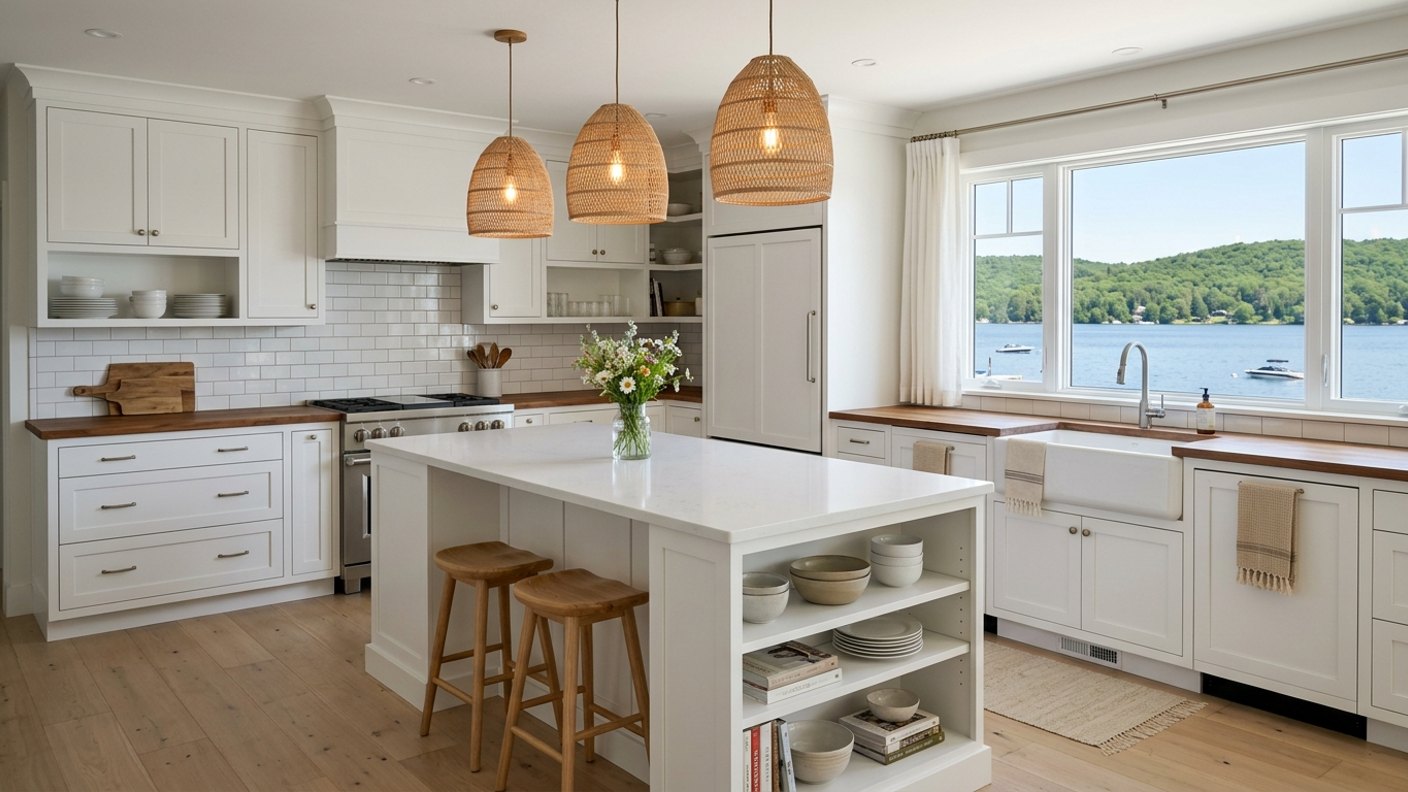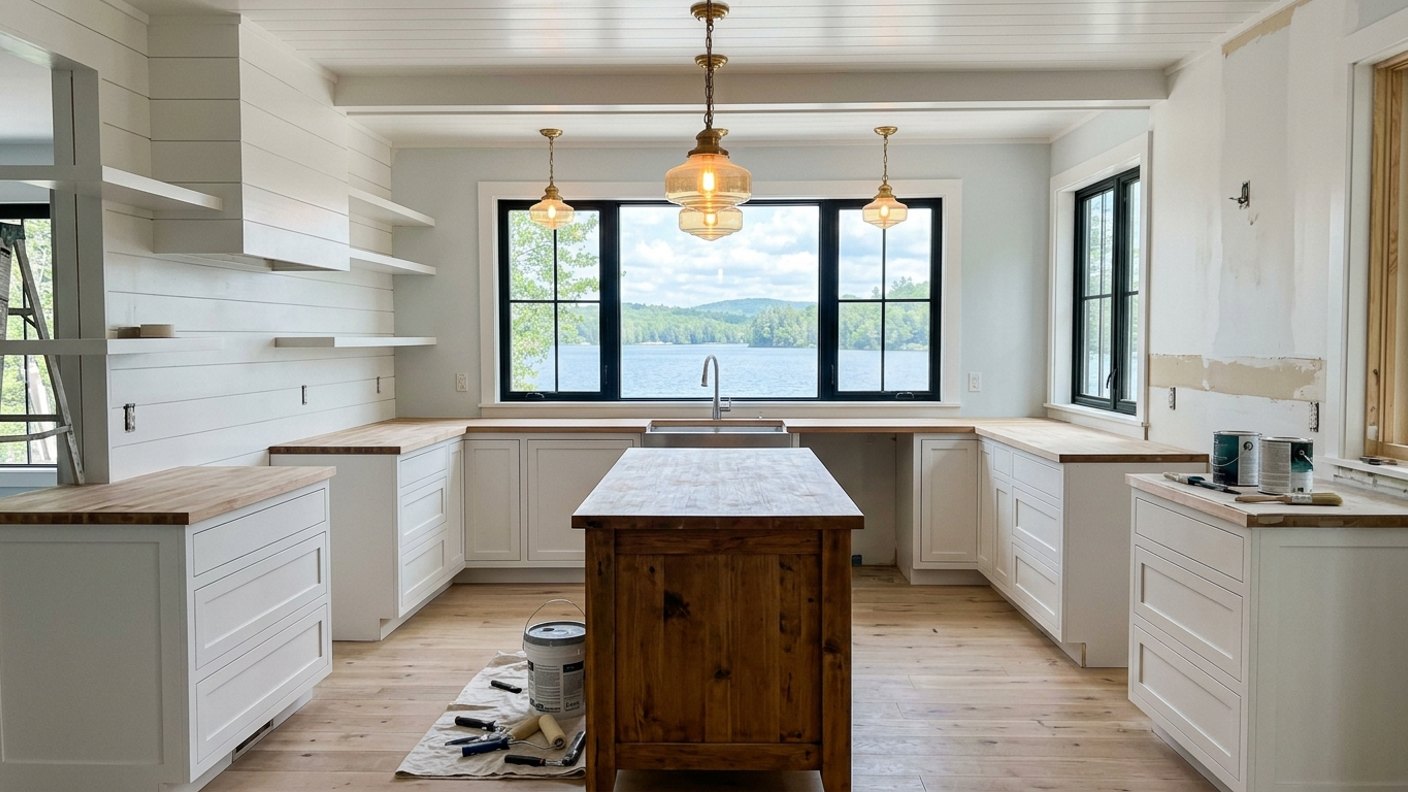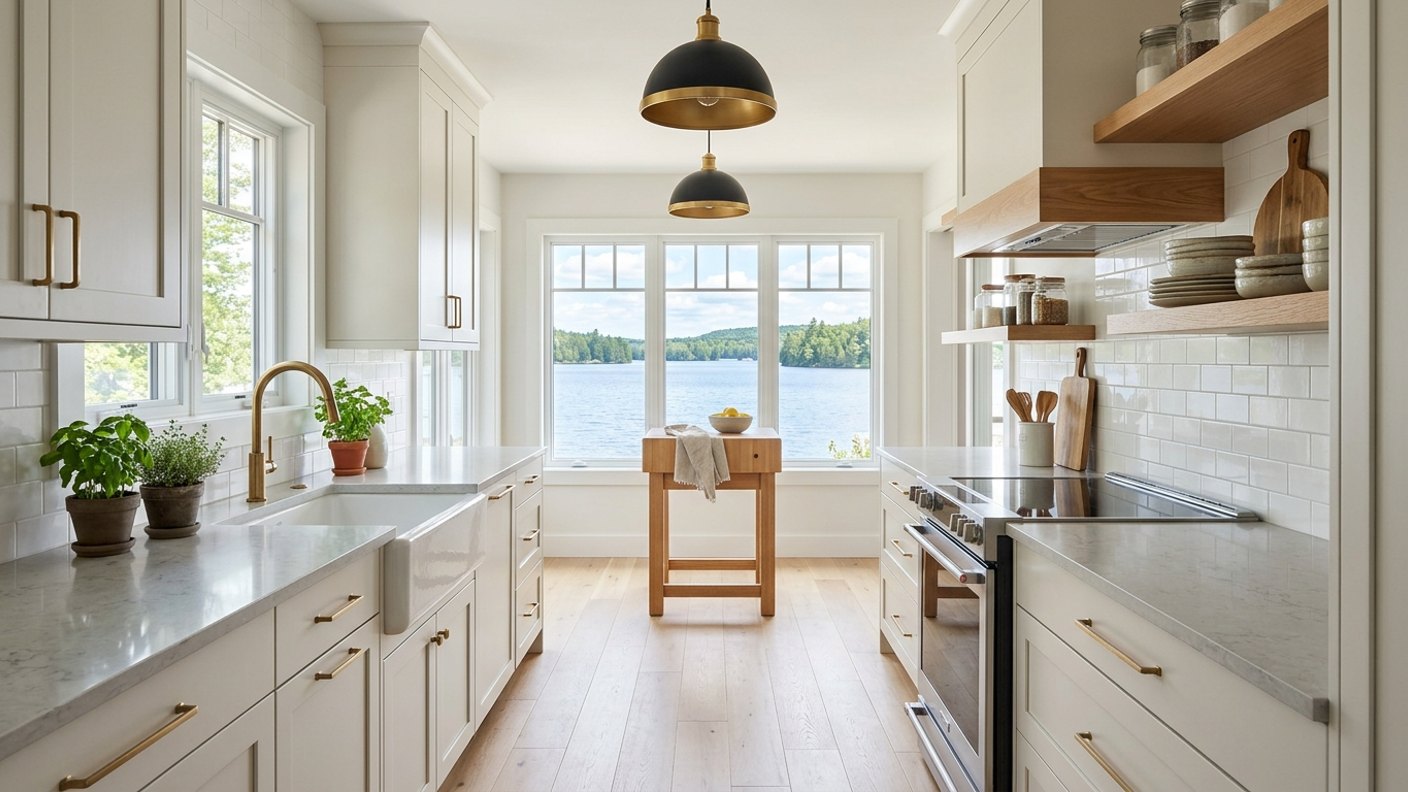
A lot of older lake cottages come with a cramped galley kitchen, two runs of cabinets squeezed into a narrow space that feels more like a corridor than a room. They're often dark, tight, and turned away from the view. But a galley has real strengths if you rework it right, and it can become a hardworking, bright little lake kitchen. Here's how I rework a galley so it stops feeling like a hallway.
Play to the Galley's Strengths
Before fighting a galley, I remind owners of its strengths: it's efficient and space-saving, with everything in easy reach along two runs. The tight work triangle of a galley actually cooks beautifully. So I don't try to make it something it isn't. I lean into its efficiency and fix its weaknesses, which are usually darkness, tightness, and isolation from the view. A galley reworked to its strengths is a genuinely good small-kitchen layout.
Light and Bright Finishes
The first fix for a corridor-like galley is light, bright finishes throughout, soft whites and pale colours on the cabinets and walls that bounce light and open up the narrow space. A dark galley feels like a tunnel; a light one feels like an airy little kitchen. In a lake house, bright breezy finishes also connect it to the water and the light. Brightening the finishes is the cheapest, biggest improvement to a cramped galley.
Mind the Width
The single most important factor in whether a galley feels cramped is the width between the runs. I make sure there's comfortable clearance, generally at least around 42 inches, more if two people will work or pass at once. Too narrow and a galley is genuinely unpleasant to cook in; adequate width transforms it. Where I can steal a few inches to improve the clearance, I do, because that width is what separates a tight galley from a comfortable one.
Open One End
A galley closed at both ends feels like a corridor, so wherever possible I open one end to an adjoining room, the dining area, or, best of all in a lake house, the view. An opening at the end gives the galley breathing room, light, and a sense of connection rather than enclosure. Even widening a doorway or adding a pass-through helps enormously. Connecting a galley to the wider house and the lake is what stops it feeling closed in.
Light It Down the Length
Lighting makes or breaks a galley. I layer warm light down the narrow space, pendants or a row of fixtures along the centre, under-cabinet task light on both runs, and swing-arm sconces where useful, all warm 2700K. Good even task light on the work runs is essential, and wall-mounted fixtures keep the scarce counters clear. Layered warm lighting turns a dim galley into a bright, welcoming little kitchen rather than a gloomy passage.
Storage Goes Up
Floor space is scarce in a galley, so all the storage goes vertical, tall cabinets and shelves up both runs, smart pull-outs and corner solutions, open shelving for everyday items. Maximising the walls is the only way a narrow galley holds what a busy lake house needs. Keeping the counters clear in the bargain makes the space feel and work bigger. In a galley, up is the only direction storage can grow, so I use every inch of it.
Keep It Clear
Clutter is fatal in a galley. It shrinks an already narrow space instantly. So I design in enough smart storage that everything has a home, and keep the runs and the look clean and uncluttered. A clear galley feels open and efficient; a cluttered one feels like an obstacle course. The discipline of keeping the counters and the space clear is essential to a galley that works, especially with a summer houseful passing through.
From Corridor to Hardworking Lake Kitchen
Played to its strengths, brightened, widened where possible, opened at one end, lit down its length, stored vertically. And kept clear, a galley lake house kitchen goes from cramped corridor to efficient, bright, hardworking little kitchen. It won't be a grand open plan, but it doesn't need to be. A well-reworked galley feeds a full summer house beautifully and feels like a charming, airy lake kitchen, which is exactly the goal.
Lighting in this kitchen: pendant lighting and swing-arm wall sconces