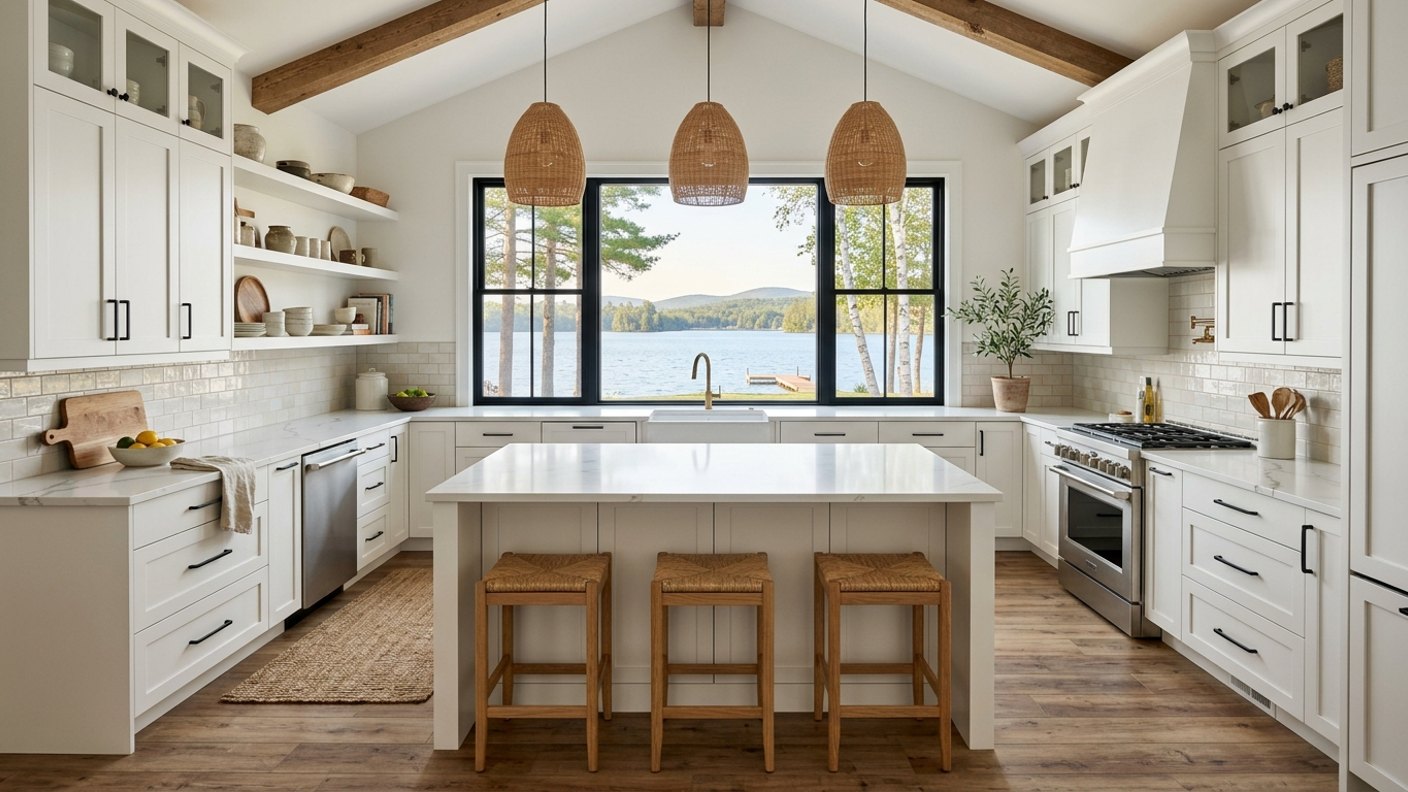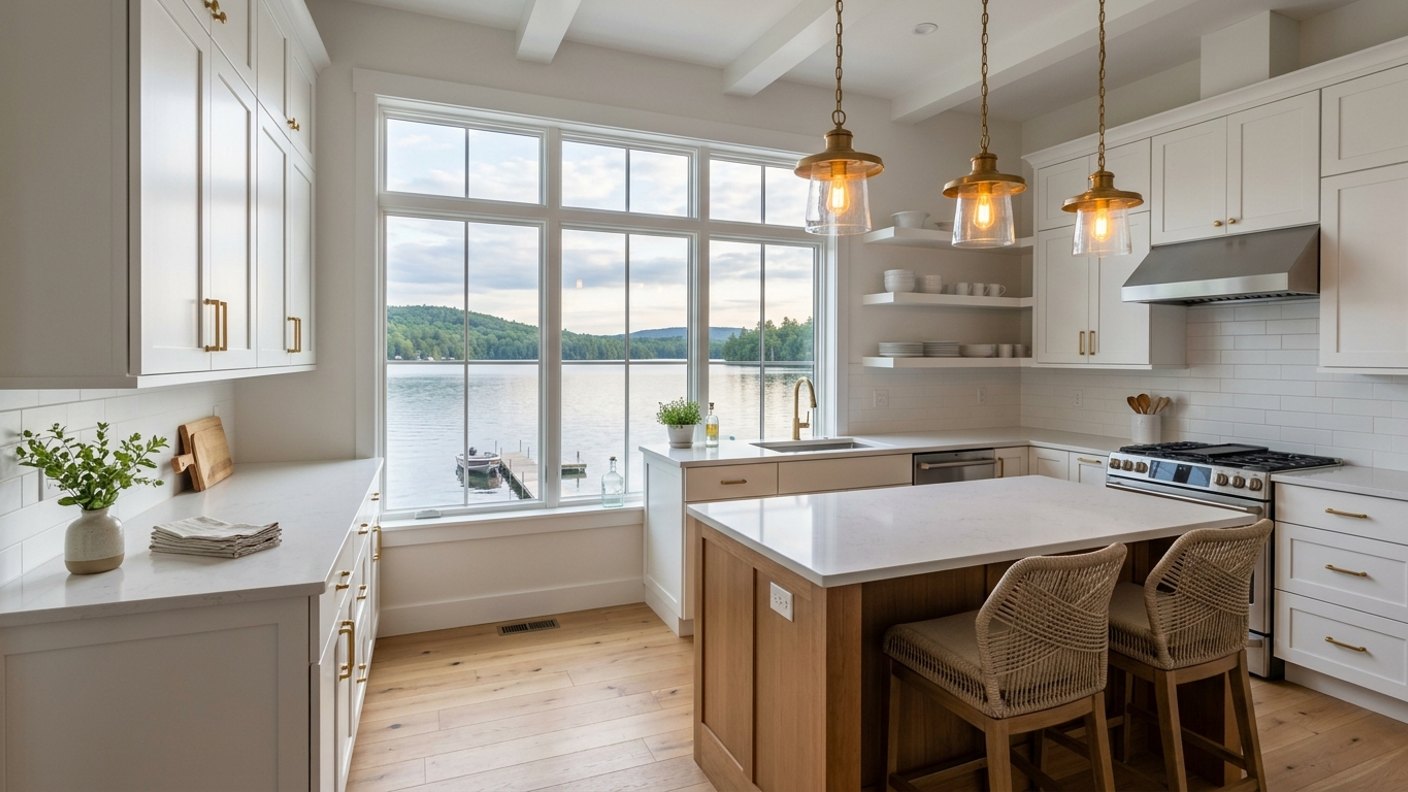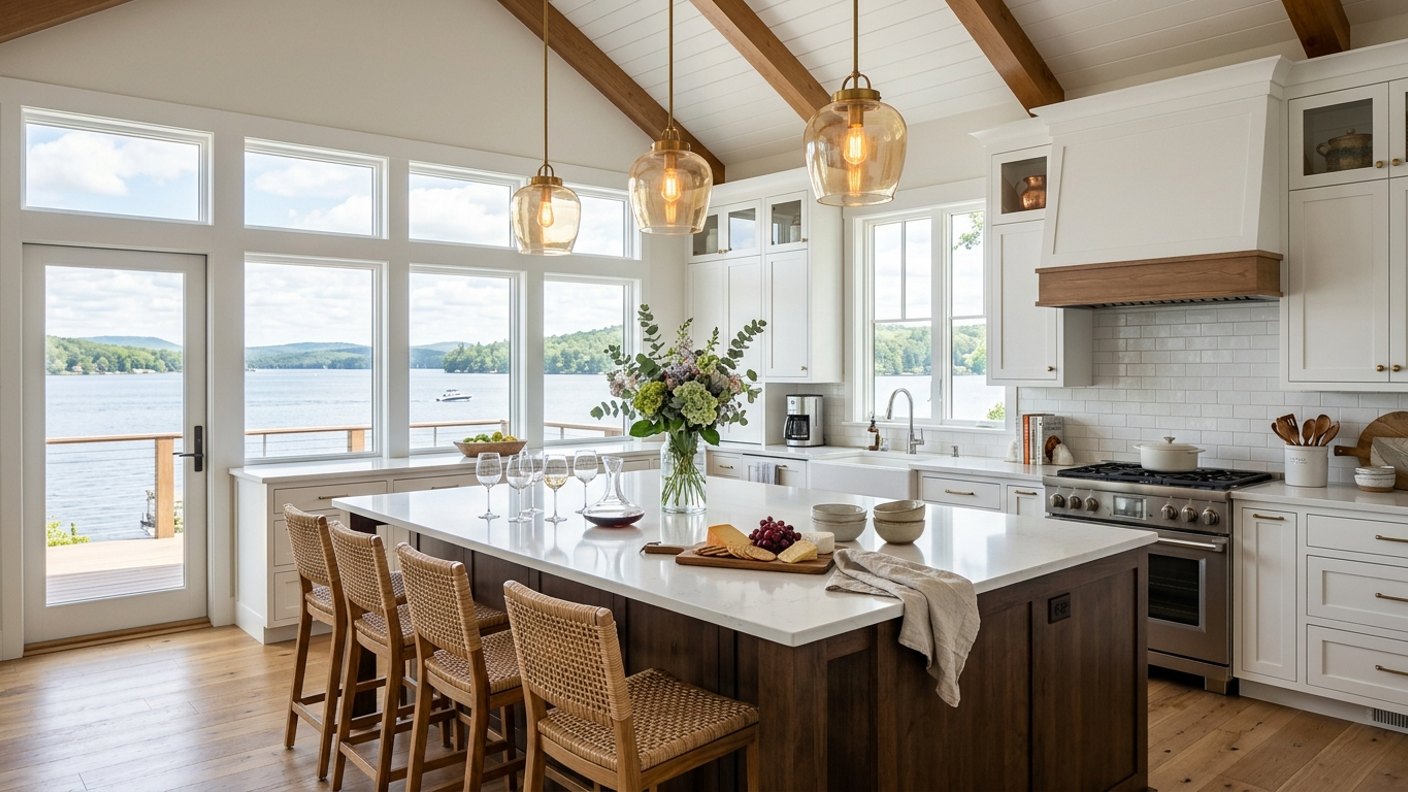
Strip away the breezy looks and the lake views, and a lake house kitchen has one real job: feeding a houseful. The whole point of a lake house is the crowd, family, friends, kids off the dock, everyone hungry at once. A kitchen that can't handle that has failed at its core function. So I design every lake kitchen around feeding a crowd without the cook losing their mind. Here's how.
Design for Many, Not One
The fundamental shift is designing for a crowd using the kitchen at once, not a single cook on a quiet night. A lake kitchen has multiple people prepping, gathering, grabbing drinks, and helping out, all at the same time. So I plan for that reality from the start, multiple zones, generous space, clear flow. A kitchen designed around one cook jams up the moment the house fills, which at a lake house is most of the summer. Plan for the many.
Abundant Prep Space
Feeding a houseful means a lot of simultaneous prep, so I plan generous, uninterrupted counter runs plus a big island for working. There's never too much prep space in a lake kitchen, big meals for a crowd need room to spread out, and several people helping need room not to collide. Abundant, well-placed counter space is one of the most important things I design in. When I'm weighing trade-offs, prep space usually wins, because it's what lets the kitchen actually feed everyone.
The Island as Command Center
The big island is the heart of a crowd-feeding kitchen, prep surface, gathering spot, serving station, and casual seating all in one. I place the seating on the far side from the work zone so people gather near the cook without intruding, and size the island generously for the crowd. The island is where a lake kitchen's feed-a-houseful job really happens, the command center the whole busy summer runs through. Getting it generous and well-zoned is half the battle.
Multiple Zones
A crowd-feeding kitchen needs several things happening at once, so I create distinct zones, a primary cooking zone, a prep area, a drinks station, a clean-up zone. So multiple people can work without piling into one spot. Zoning lets the kitchen absorb a crowd of helpers and grazers gracefully. A single-zone kitchen forces everyone into the same space and grinds to a halt; multiple zones keep a busy lake kitchen flowing. The zones are what make many cooks workable.
Keep Guests Out of the Triangle
The cook needs a protected working triangle, so I design to keep guests happily out of it. A drinks and snack station away from the cooking zone, island seating on the far side from the work area. And circulation that routes traffic around rather than through the prep space all give guests their own spots to gather and graze without crowding the cook. Everyone stays in the social flow, but the cook keeps their working space. That separation is what keeps the chaos friendly.
Drinks and Snack Stations
A lake house grazes constantly all day, so I build in dedicated drinks and snack stations, a spot for the cooler and drinks, easy-access snacks, somewhere wet kids can grab something without disrupting the cook. These small zones keep the crowd fed and watered without everyone converging on the working kitchen. They're a quiet secret of a kitchen that feeds a houseful smoothly: give the constant grazing its own place, and the main kitchen stays free for real cooking.
Flow to Dining and Outdoors
Feeding a lake crowd spills well beyond the kitchen, so I ensure an easy flow to the dining area and the outdoor spaces where much of summer eating happens. Wide doors, clear circulation, and open sightlines let food and people move easily between the kitchen, the table, the porch, and the dock. A kitchen that connects smoothly to where the crowd actually eats works far better than one closed off from it. The flow outward is part of how a lake kitchen feeds everyone.
Light It for the Crowd
A crowd-feeding kitchen needs to be well-lit and welcoming, so I light it warmly and in layers, pendants over the island, task light on the work zones, and sconces filling in, all warm 2700K. Good warm light makes the kitchen practical for big-meal prep and inviting for the crowd gathering in it. And gives that golden glow as a lake dinner runs into the evening. The lighting ties the whole busy, crowd-feeding kitchen together and keeps it feeling warm rather than frantic.
Lighting in this kitchen: pendant lighting over the island and warm wall sconces