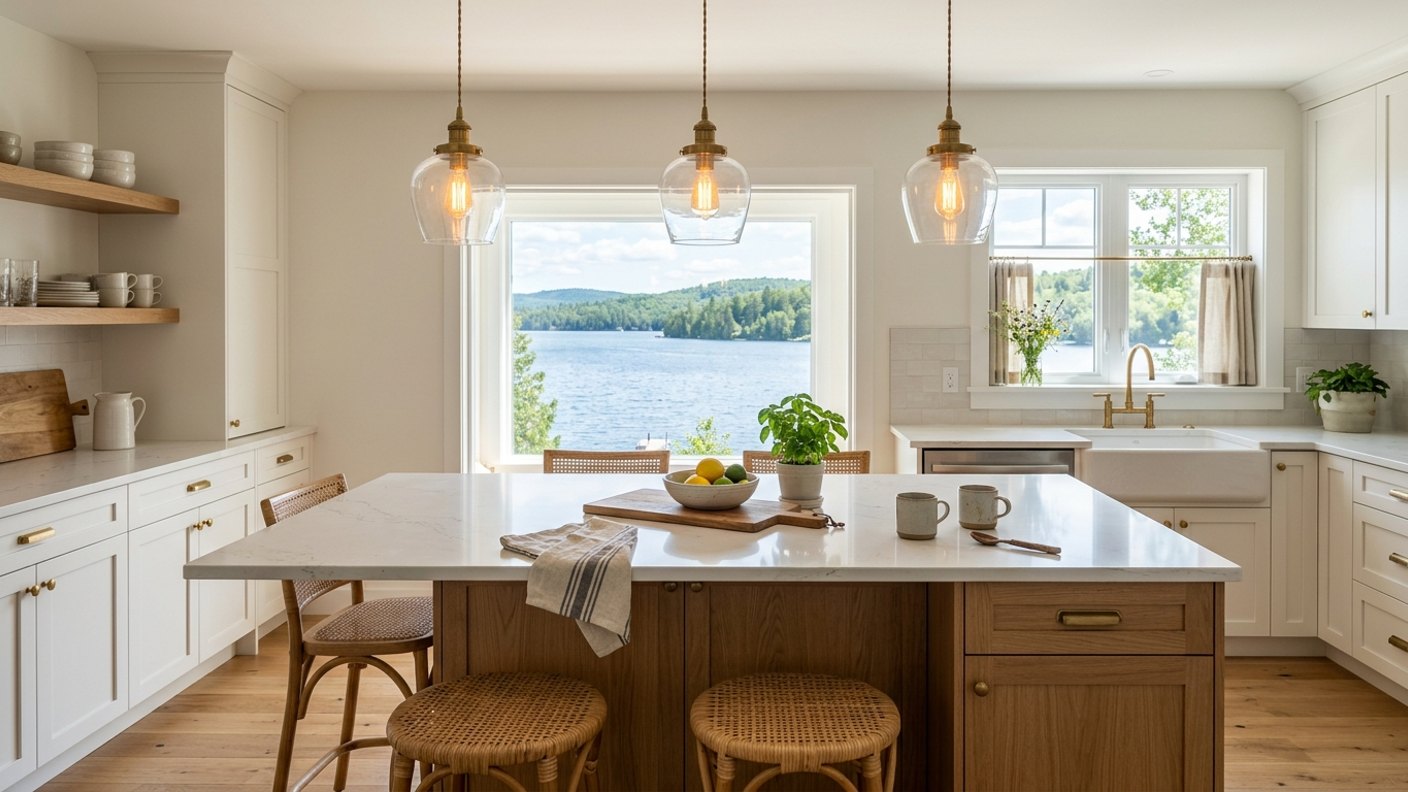
A lake house kitchen floor takes a beating few floors ever see, wet feet padding in from the dock, sandy paws, dripping swimsuits, spilled drinks from a crowd. And then a damp, unheated winter alone. A delicate floor doesn't stand a chance. So I choose flooring that survives all of it and still looks warm and breezy. Here's the flooring I trust in a lake house kitchen.
Water Resistance First
By the water, the first question for any floor is how it handles moisture, because a lake kitchen floor is constantly wet, feet off the dock, dripping swimsuits, spills. A floor that warps, stains, or struggles with water is the wrong floor here. So I prioritise water resistance above almost everything, then look at durability, warmth, and looks. A floor that can't take the constant wet of lake life will fail no matter how good it looks on day one.
Luxury Vinyl Plank Leads
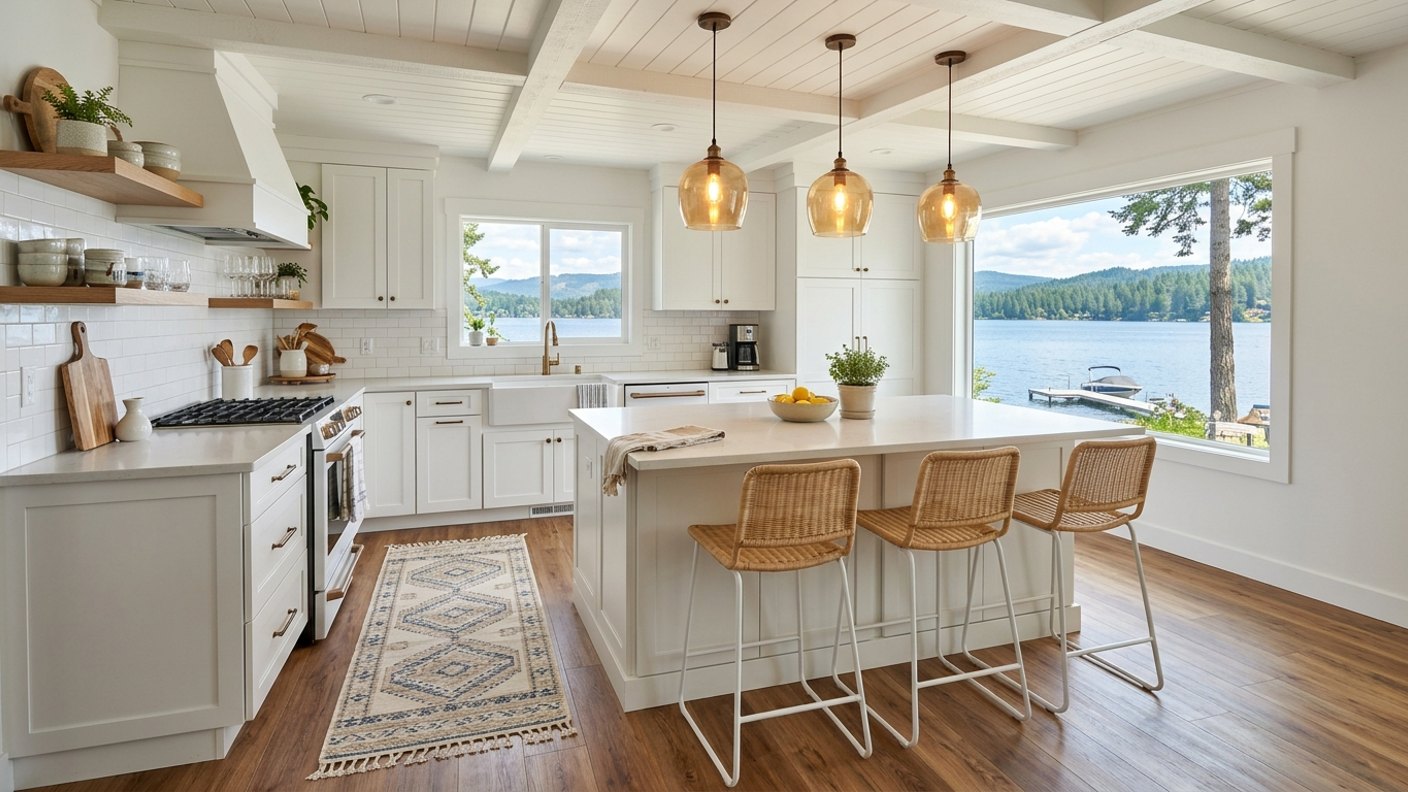
My go-to lake kitchen floor is quality wood-look luxury vinyl plank. It's water-resistant, scratch-resistant, warm-looking, easy to clean, affordable, and forgiving of the damp seasonal conditions a lake house sees. It shrugs off wet feet, sand, and heavy use better than almost anything while still giving the warm, breezy wood look a lake kitchen wants. For most lake houses, LVP is the practical, good-looking winner, and it's what I specify most often.
Tile Where It's Wettest
In the very wettest spots, right by a door from the dock, or where water really pools. I'll use tile, which is essentially impervious and indestructible underfoot. It's cold underfoot, so I reserve it for those specific high-water zones rather than the whole kitchen, often warmed with a rug. Tile handles the toughest, wettest areas of a lake kitchen that even LVP would rather avoid. Matching the floor to the water exposure, zone by zone, is part of getting it right.
Real Wood, With Caution
Some owners love real wood, and it can work in a lake kitchen if it's properly sealed and maintained and ideally engineered for better humidity tolerance. But I'm honest that it's more vulnerable to water and the damp seasonal conditions than the water-resistant options. Many lake houses choose wood-look LVP or tile in the hardworking kitchen for peace of mind, and keep real wood for the drier living areas. I help owners weigh the look against the lake-life risk.
Warm Tones Hide the Mess
Whatever the material, I choose warm mid-tone wood looks, because they hide sand, dirt. And wear between cleans far better than very pale or very dark floors, which show every speck. A warm mid-tone also gives the kitchen that cozy, breezy lake feeling and flatters the warm lighting. In a busy lake kitchen, a floor that forgives a little grit is a floor you'll actually enjoy living on all summer. Tone is a quiet but real durability feature.
Rugs for Warmth and Grit
Over the hard floor I layer washable rugs and runners. They add warmth and softness underfoot, catch sand and water at key spots, and bring breezy character. The key is washable, because lake rugs see wet feet and sandy paws. A durable, washable runner at the sink and by the door protects the floor and makes the kitchen cozier. Rugs are the easy, replaceable layer that adds warmth to a tough lake floor.
Light It Warm
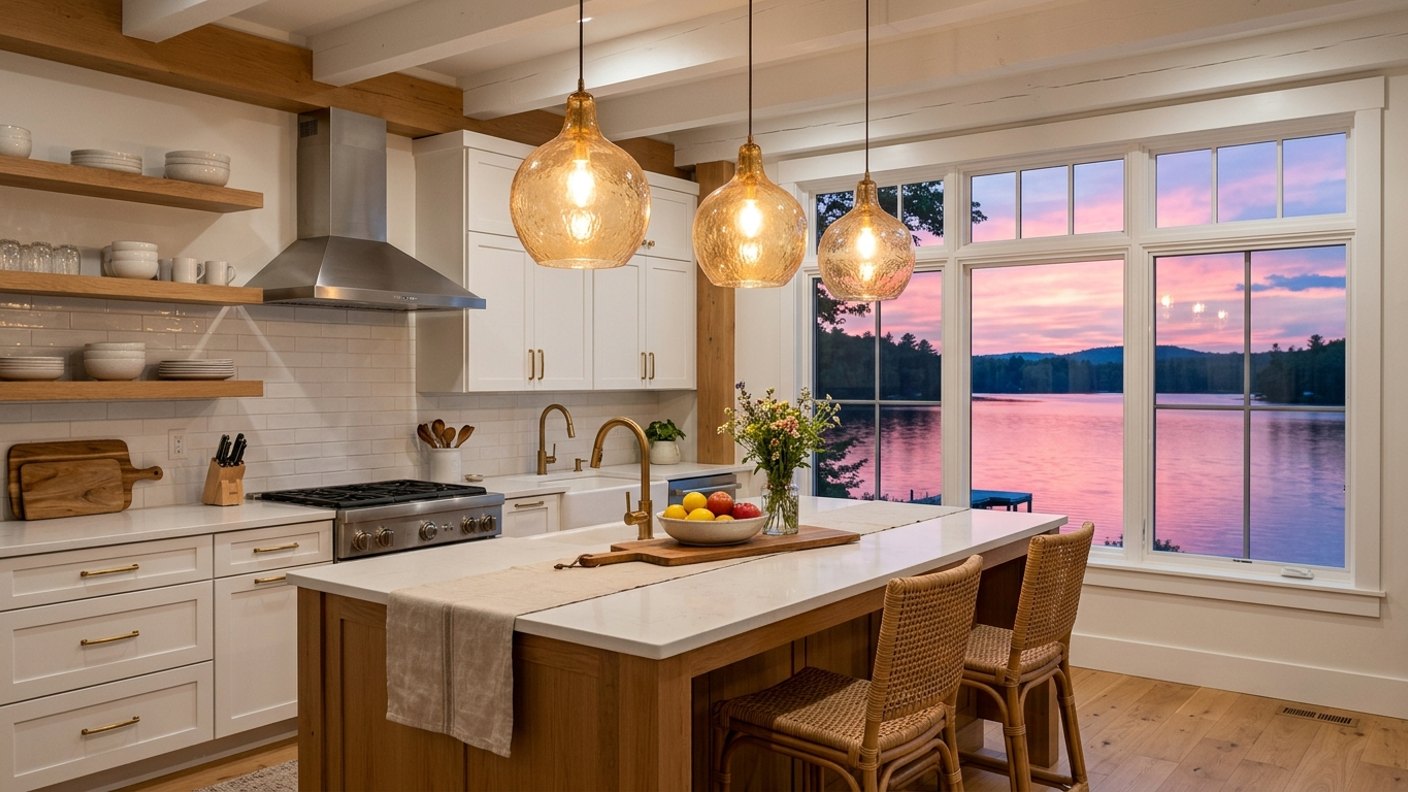
A durable floor can feel flat under cool light, so I light a lake kitchen floor warmly, pendants and sconces on warm 2700K bulbs that make the wood tones glow, especially at dusk. Warm light brings even a practical LVP floor to life and ties it to the cozy lake feeling. Durability and warmth go together when the tone, the rugs, and the lighting all pull the same direction. The light is what makes a tough floor look rich.
Tough Underfoot, Warm to Live On
Water-resistant first, LVP as the workhorse, tile in the wettest spots, real wood only with caution, warm tones to hide the mess, washable rugs, and warm lighting. That's how I floor a lake house kitchen. The brief is a floor that survives wet feet, sandy paws, and a damp empty winter while feeling warm and breezy underfoot all summer. Get it right and the floor disappears into the background, quietly taking everything lake life throws at it. Which is exactly what a lake kitchen floor should do.
Lighting in this kitchen: warm pendant lighting and warm wall sconces