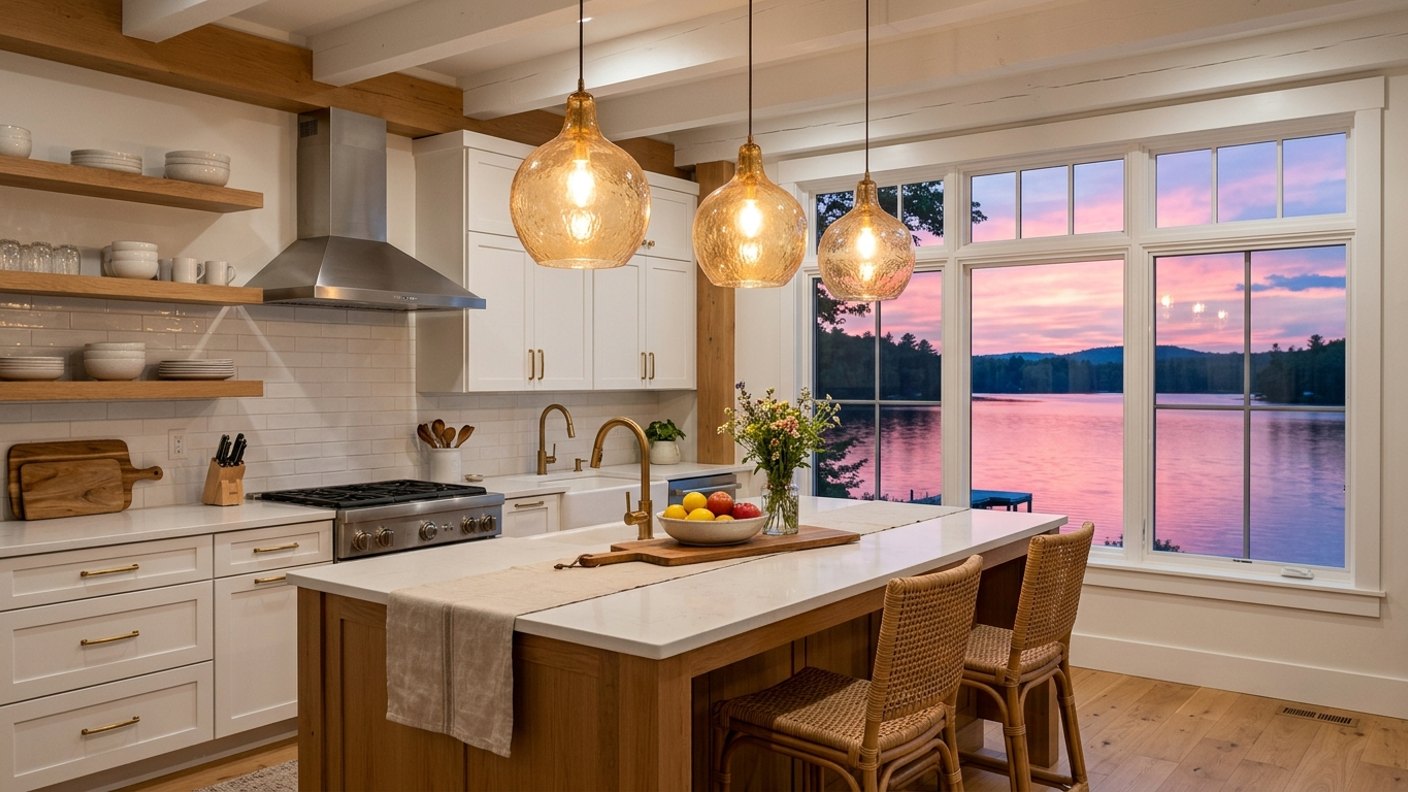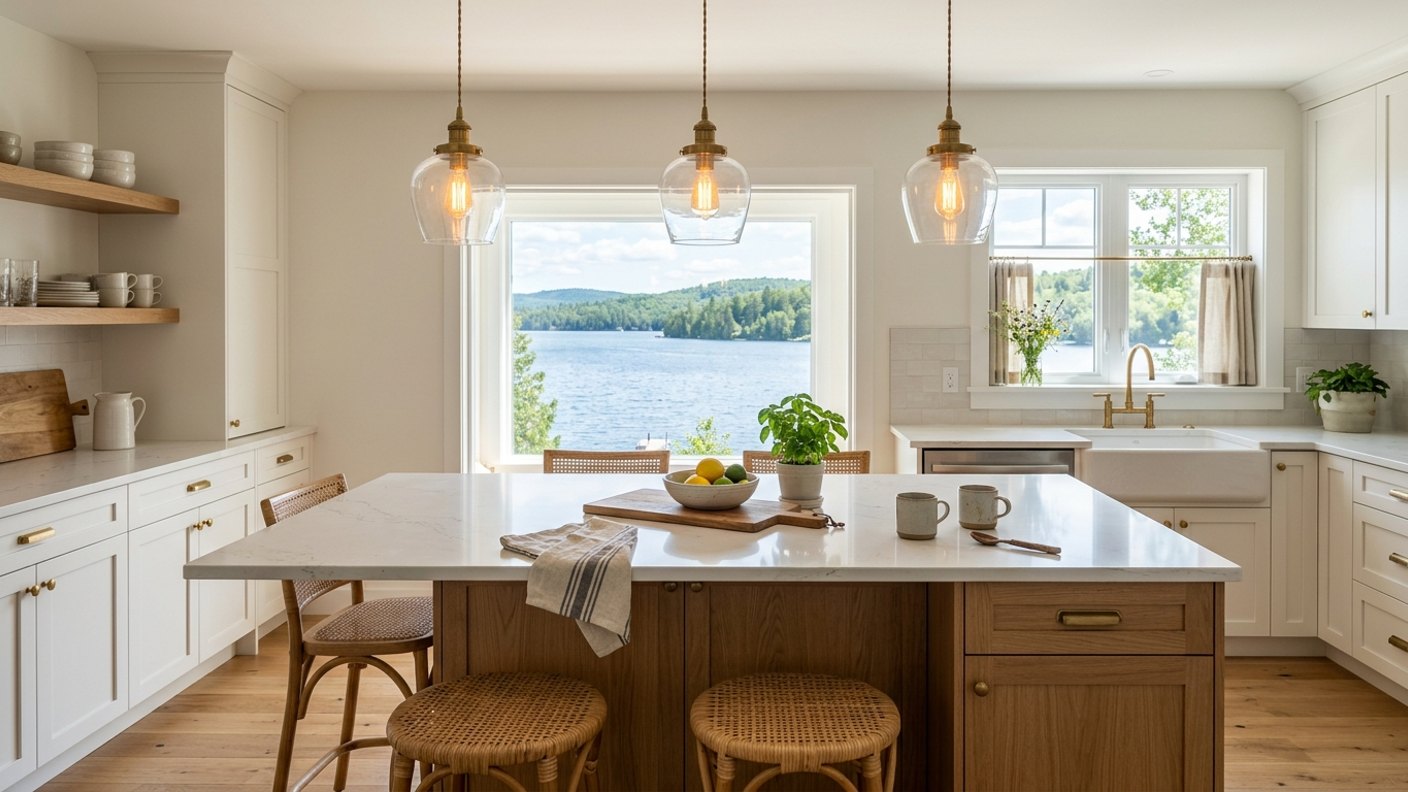
Storage in a lake house kitchen has a double challenge most kitchens never face: it has to hold enough to feed and host a crowd all summer. And then be easy to empty, clean, and protect when the house closes up for a damp, empty winter. Plan for one and forget the other, and you'll regret it. Here's how I plan pantry and storage for a seasonal lake kitchen that does both.
Store for a Crowd
A lake house kitchen feeds far more people than its size suggests. So it needs generous storage, pantry, cabinet, and island space for bulk food, lots of dishware and glasses, and all the entertaining gear a summer of hosting demands. I plan more storage than a regular kitchen of the same size would need, because the summer houseful eats and uses dishes at a serious pace. Under-storing a lake kitchen leaves you scrambling all season, so I err generous.
Plan for Opening and Closing
The thing that makes seasonal storage different is the open-and-close rhythm. I design storage that's easy to stock at the start of summer and easy to empty, clean. And protect at the end, clear zones, accessible shelving, sealed containers, and a logical routine for what gets cleared and what stays. A kitchen planned around opening and closing makes each transition quick and ensures nothing's forgotten or left to spoil. The seasonal rhythm shapes how I lay the storage out.
Seal Against Pests
A lake house sitting empty is a target for pests, so pest-proofing the storage is essential. I store all food in sealed, pest-proof containers, design for a complete clear-out of perishables and tempting items at closing, and keep storage tight and sealable. Leaving open packages or crumbs in a closed-up lake house is asking for an unpleasant surprise come spring. The storage and the closing routine are built to leave nothing that attracts pests over the long empty winter.
Beat the Damp
The other seasonal enemy is damp, a closed-up lake house gets humid, which can ruin stored items and breed problems. So I choose damp-tolerant storage, keep precious or vulnerable items out of the worst spots, and design for good airflow where I can. Being realistic about the humidity a seasonal house develops means the storage protects what's in it rather than letting the damp wreck it. Planning around the damp is part of designing storage that survives the off-season.
A Real Pantry If There's Room
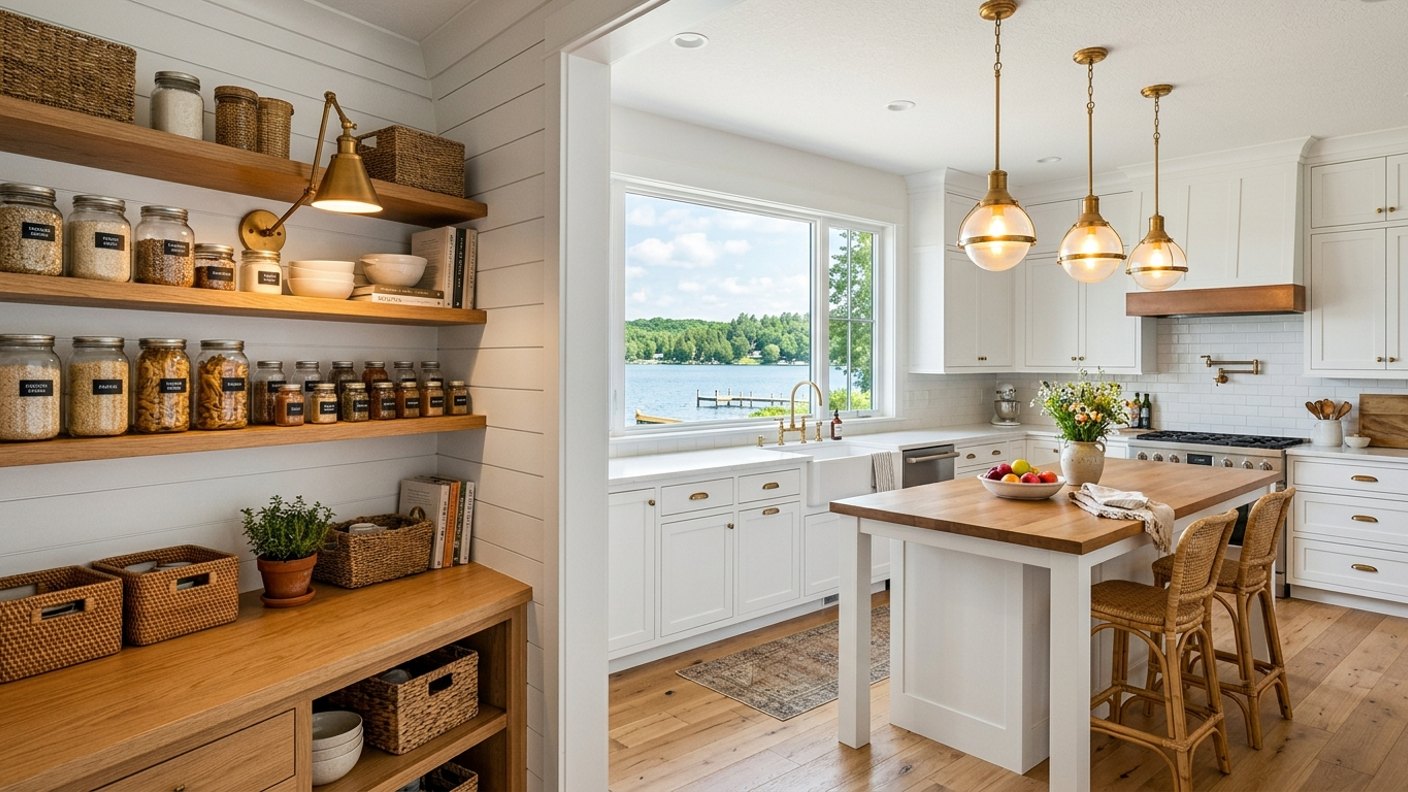
Where the space allows, a dedicated pantry is a gift in a lake house. It holds the bulk food and entertaining supplies a summer needs, keeps the working kitchen clear, and is easy to stock and clear seasonally. A good pantry, sealed and organised, handles the volume a lake house demands while keeping it contained. If there's room for a pantry, even a small one, I'll usually fit it, because it solves the lake kitchen's storage-for-a-crowd problem so neatly.
Maximise a Small Kitchen
Many lake kitchens are small but still have to store for a crowd. So I maximise every bit of space, vertical and built-in storage, drawers and cabinets in the island, a tall cabinet or pantry, smart pull-outs and corner solutions, open shelving for everyday items. Going vertical and using space efficiently is how a small lake kitchen holds what a houseful needs. Smart, space-saving storage lets even a compact kitchen handle the summer load without feeling crammed.
Light the Storage
Storage you can't see into is storage that doesn't work, so I light it, a sconce or warm fixture in a walk-in pantry, lighting in deep cabinets, a pendant where a pantry or storage zone needs it, all warm 2700K. Good light in the pantry and storage areas makes stocking, finding things, and the seasonal clear-out far easier. It's a small touch that makes the storage genuinely usable, especially when you're hunting for something during a busy summer dinner or doing the closing clean-out.
Stocked for Summer, Sealed for Winter
Generous for a crowd, organised for opening and closing, sealed against pests, damp-tolerant, anchored by a pantry where possible, maximised in small spaces, and well-lit. That's how I plan storage for a seasonal lake kitchen. It's one of the less glamorous parts of a lake kitchen and one of the most important, because it's what lets the kitchen feed a houseful all summer and then close up clean and protected. Get the seasonal storage right and the whole rhythm of the lake house runs smoothly.
Lighting in this kitchen: pantry sconces and warm pendant lighting