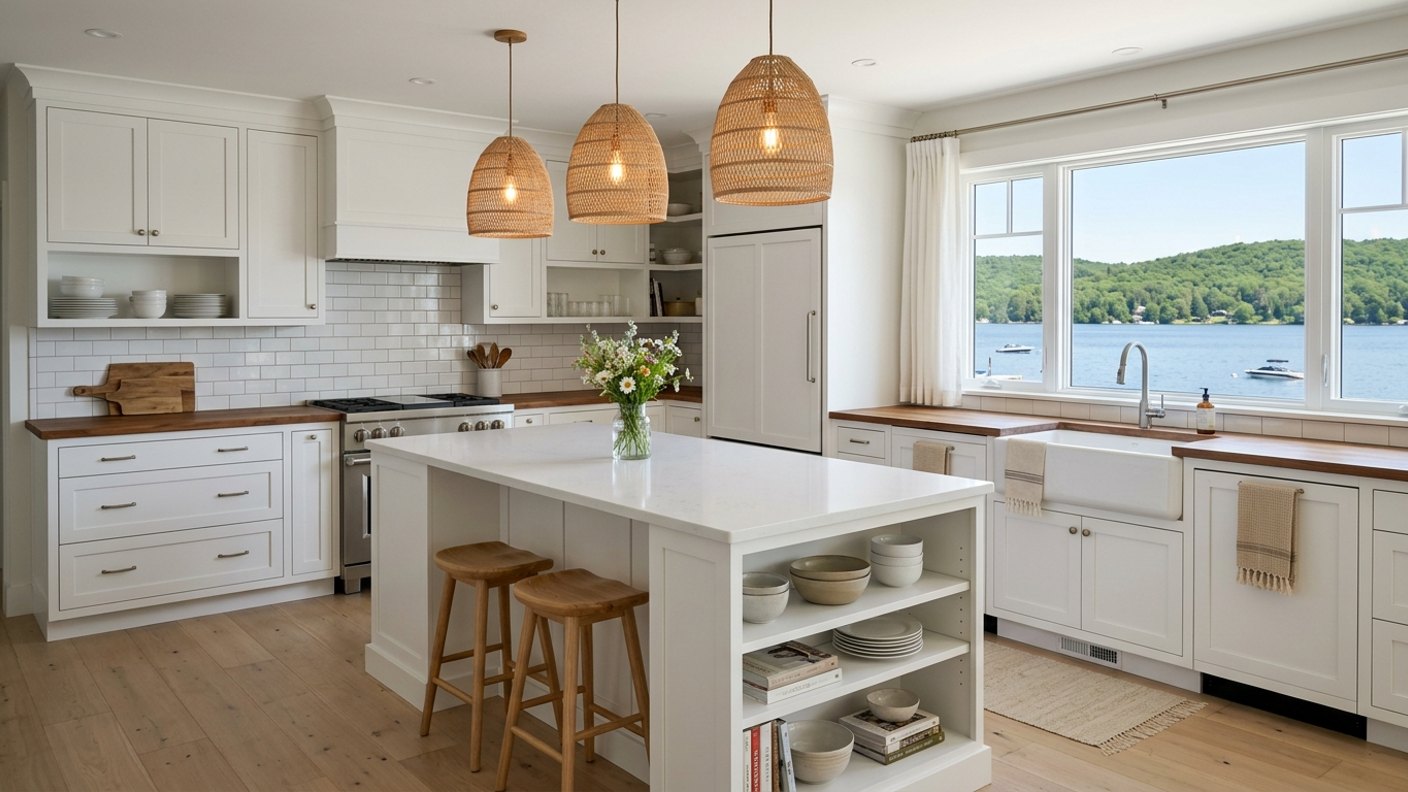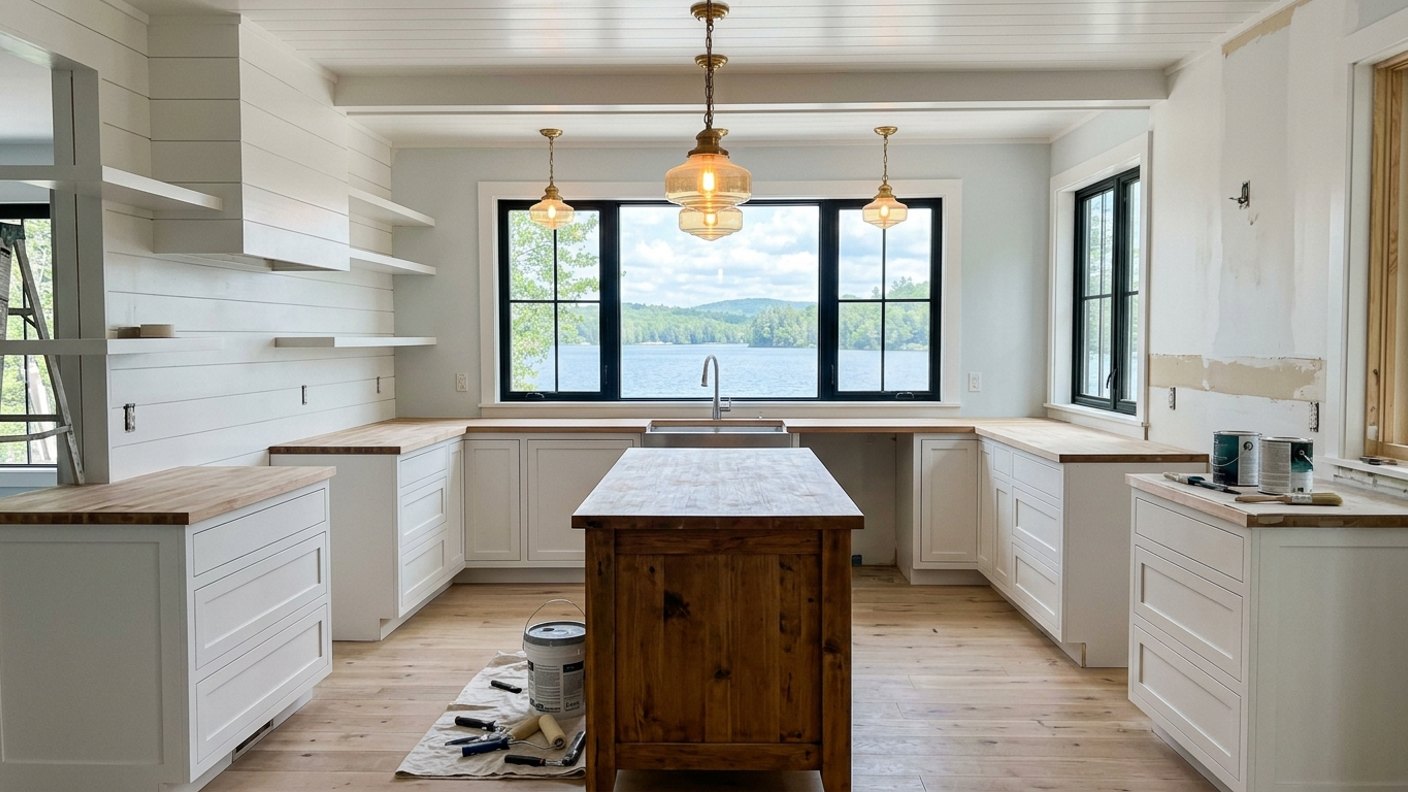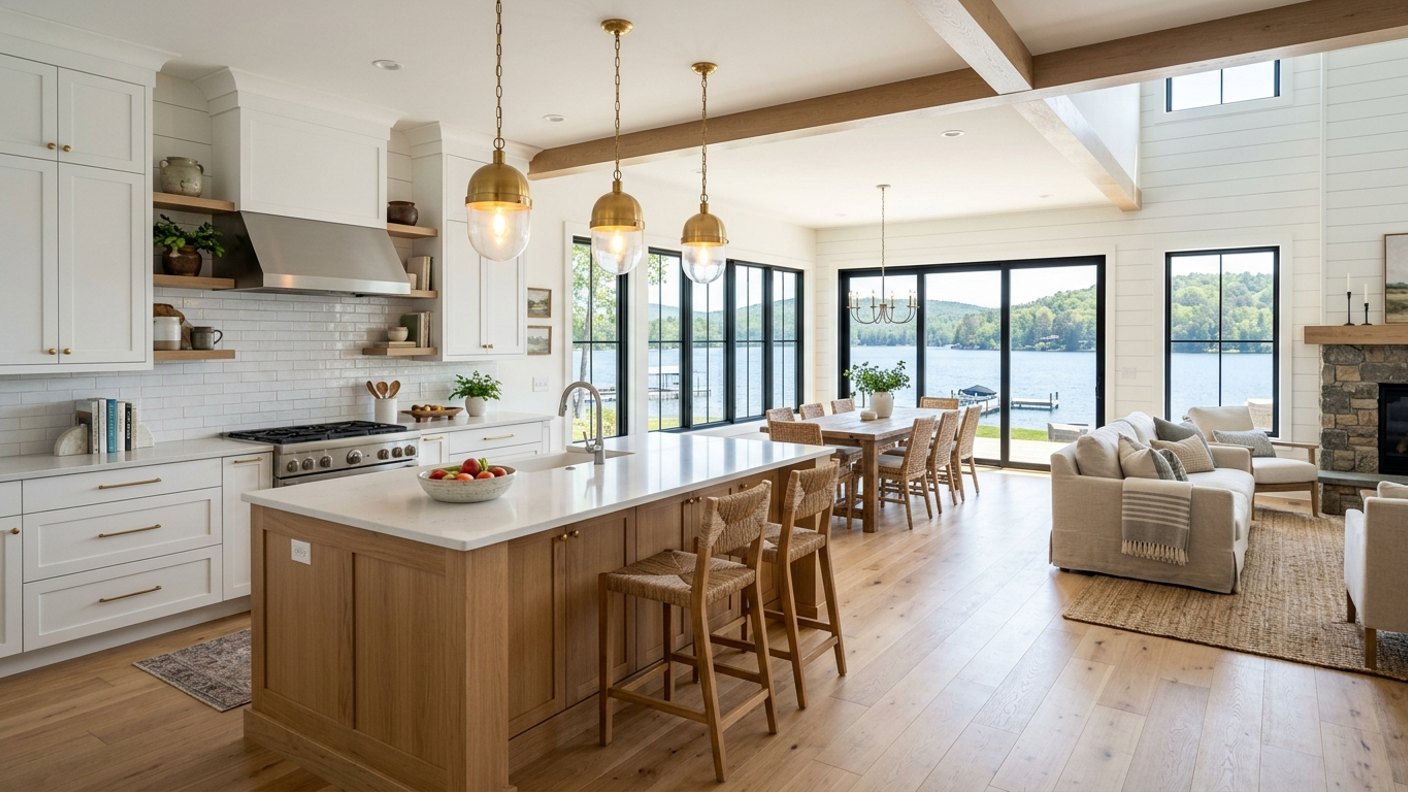
A lake house exists for one main reason: being together. The whole point is the houseful of family and friends, the easy flow between inside and the water. A closed-off, walled-in kitchen fights all of that, banishing whoever's cooking to a separate room while the fun happens elsewhere. That's why I open up almost every lake kitchen I touch. Here's how I do open-concept so the cook is never left out and the crowd flows.
Keep the Cook in the Party
The best argument for an open lake kitchen is simple: it keeps the cook in the conversation. Lake gatherings are social, and nobody wants to be stuck alone over the stove missing the party. Opening the kitchen to the living and dining areas means whoever's cooking is still part of everything, chatting, watching the lake, in the middle of the day rather than exiled from it. In a lake house, that connection is worth more than a few hidden messes.
Connect to the View
An open layout lets the kitchen share in the lake view instead of glimpsing it through a doorway. I orient the key zones. The sink, the island seating, toward the water, keep the flow open to the rooms and outdoor spaces that face the lake, and avoid tall obstructions that block sightlines. When the kitchen is open to the view, the lake becomes part of the room, which is exactly what a lake house kitchen should feel like.
Design for the Flow Off the Dock
In summer, a lake house has a constant current of people moving between the water, the porch, and the kitchen. An open concept handles that flow where a closed kitchen creates bottlenecks. I plan clear, generous circulation from the dock and outdoor areas through to the kitchen and island, so a crowd coming in wet and hungry doesn't jam up. Designing for that indoor-outdoor flow is half of why open concept suits lake life so well.
Zone It With the Island
Open concept doesn't mean undefined. The island is my main tool for giving the open space structure. It anchors the kitchen zone, separates cooking from gathering without a wall, and gives the open plan a clear centre. A well-placed island lets an open lake kitchen feel both connected and organised, defining the cook's territory while keeping everyone together. It's the quiet divider that makes open concept work.
Zone It With Light
Even more than the island, lighting is how I zone an open lake kitchen. Warm pendants mark the island and kitchen, a fixture over the dining table defines the eating zone, and softer lighting sets off the living area. Each pool of warm 2700K light reads as a distinct room within the open space. The lighting keeps an open plan from feeling like one big undifferentiated hall while holding it together with a consistent warm glow.
Manage the Downsides
Open concept has real trade-offs, noise carries, cooking smells travel, mess is on show. So I design to manage them. Good ventilation handles the smells, smart storage keeps clutter controllable, and thoughtful layout keeps the working mess out of the main sightlines. In a lake house the social and view benefits almost always outweigh these, but I plan for the drawbacks rather than pretending they don't exist. Managed well, they're minor.
Make the Whole Floor One Summer Room
The goal of an open-concept lake kitchen is to make the kitchen, dining, and living areas feel like one big, warm, connected summer room that opens to the water. The heart of the house where everyone naturally ends up. Zoned with the island and the lighting, oriented to the view, and built for the flow off the dock, it does exactly that. Of all the moves I make in a lake house kitchen, opening it up is the one that most changes how the whole house lives in summer.
Lighting in this kitchen: pendant lighting over the island and dining room lighting