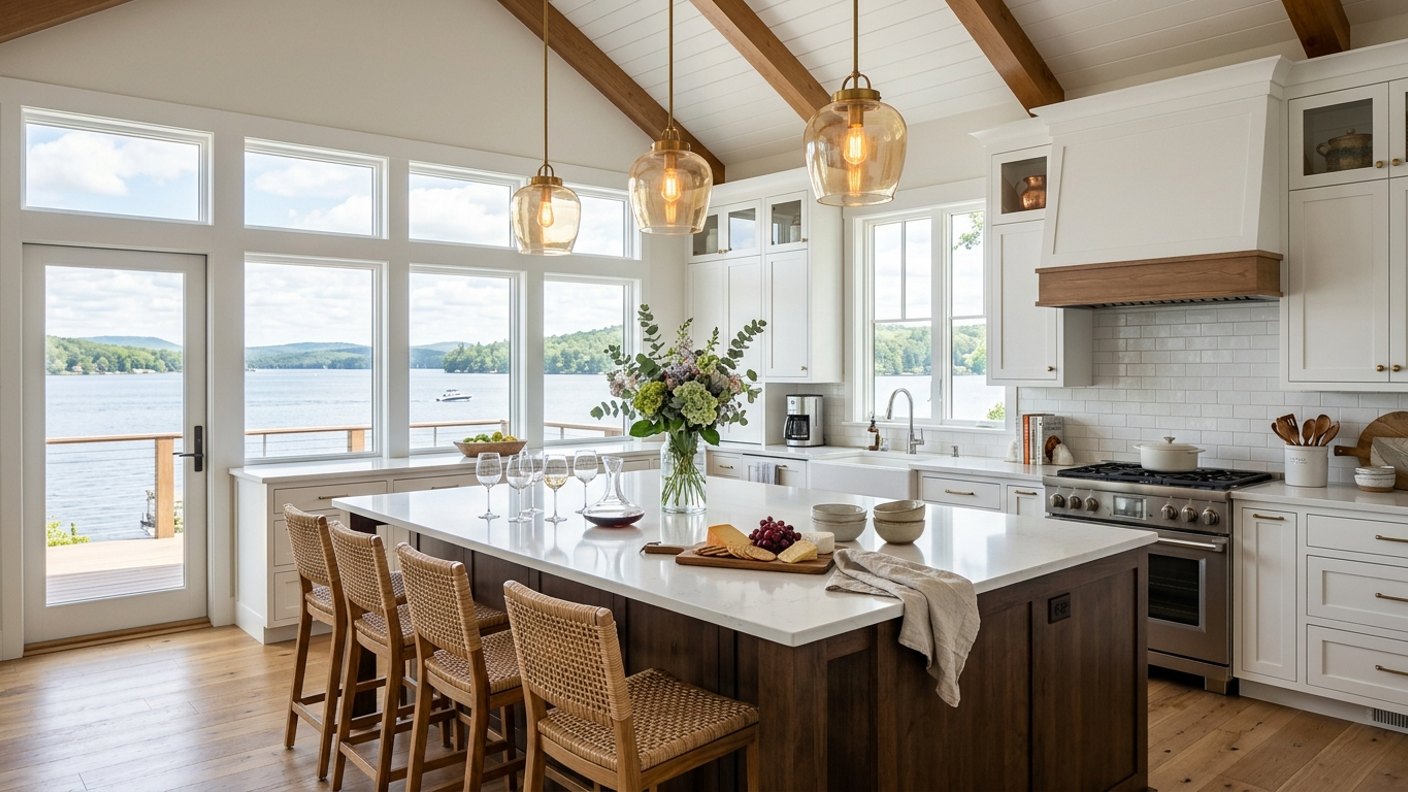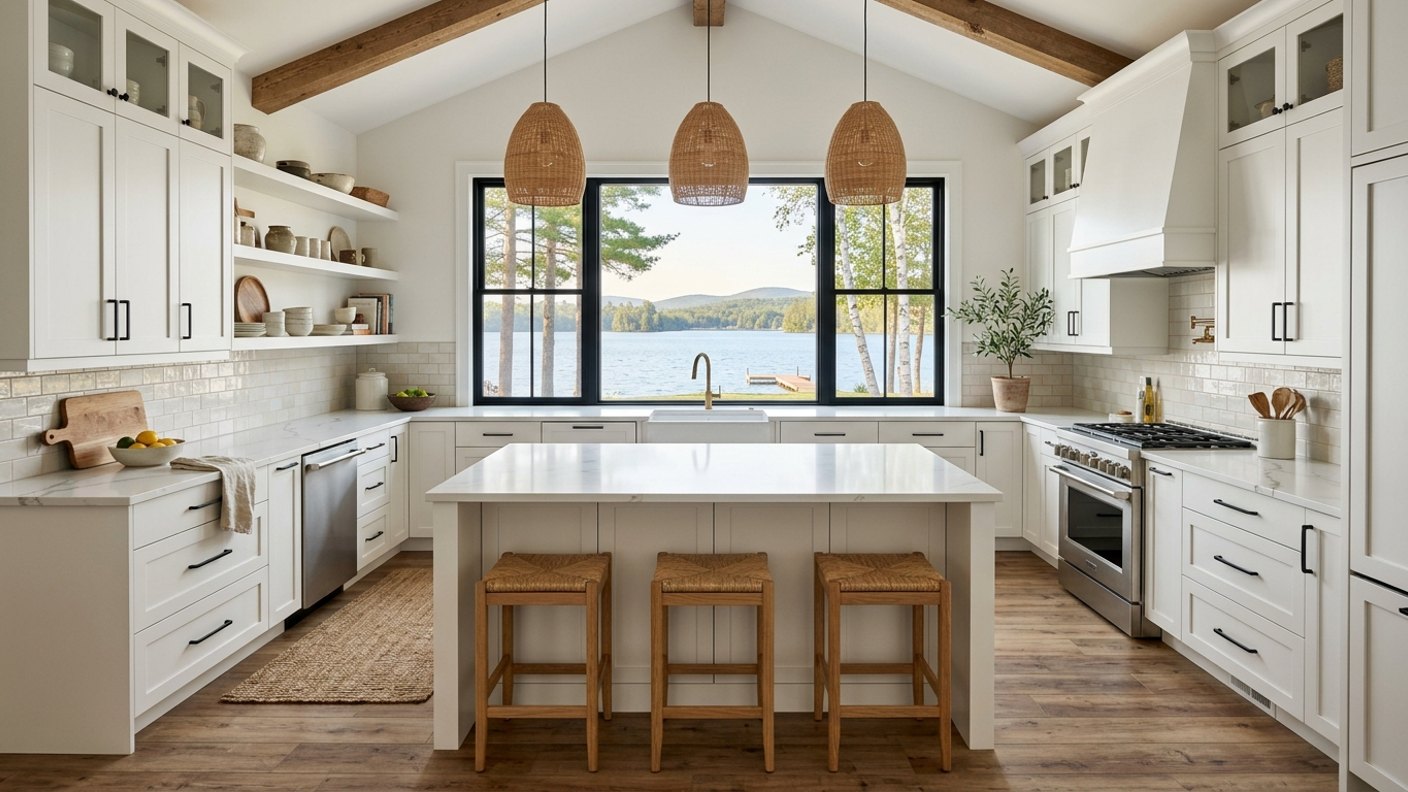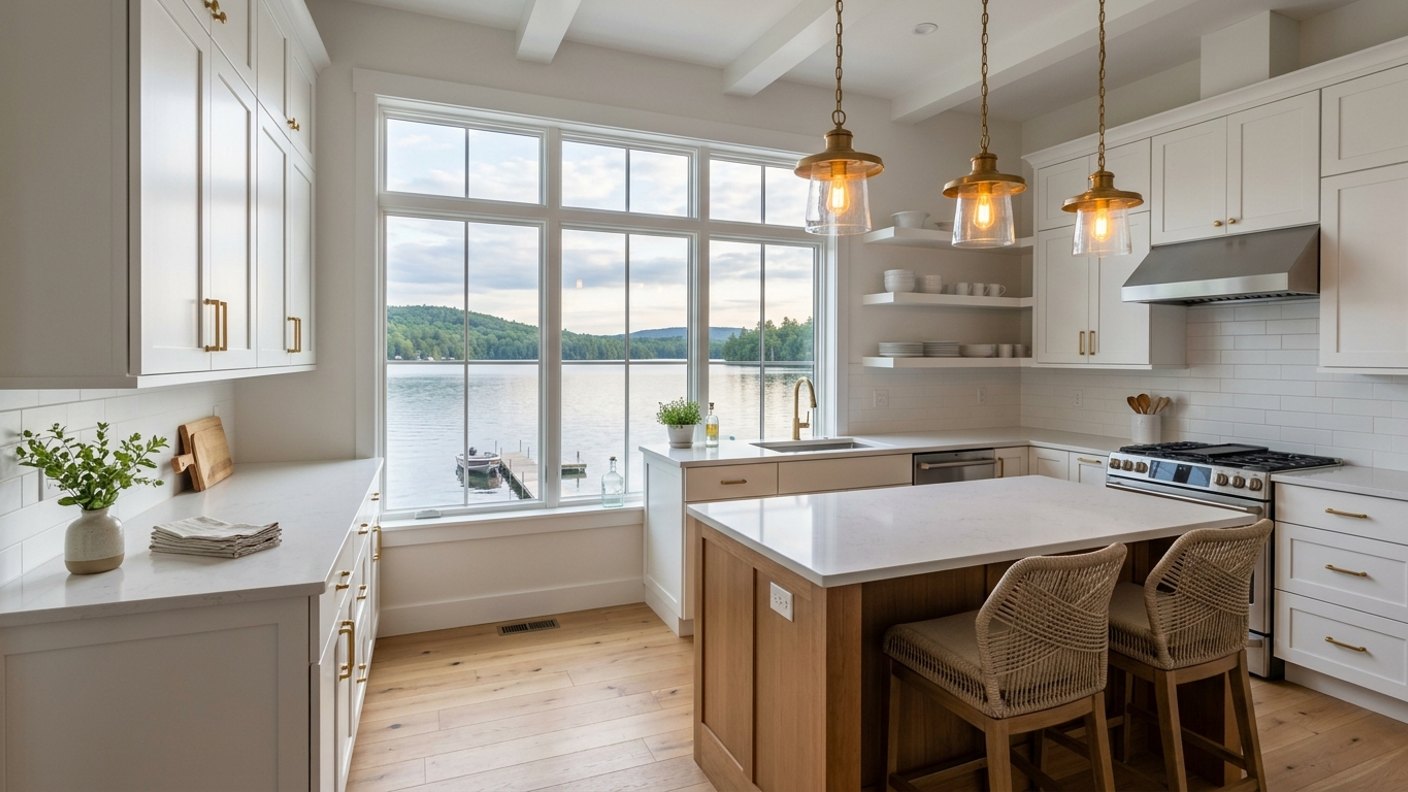
The summer's the fun part, but closing up the kitchen right is what keeps a lake house sound through the long off-season. A single burst pipe over winter can cost $5,000 to $15,000 to put right. A kitchen left wrong over winter can come back to pests, mould, or a burst pipe disaster. As someone who builds these kitchens, I care a lot about how they're protected, so I walk every client through a proper closing routine. Here's how to close up a lake house kitchen for winter.
Why Closing Up Matters
A closed-up lake house faces real threats over winter, pests looking for food and shelter, damp breeding mould, and freezing temperatures threatening the plumbing. A kitchen, with its food, water, and many surfaces, is ground zero for all three. Doing the closing properly is what stands between a kitchen that opens fresh in spring and one that opens to an unpleasant, expensive surprise. It's worth the hour or two it takes, every single year. I never let a client skip it.
Clear Out All Food
The first and most important task is removing all food and perishables, anything that can spoil, attract pests, or make a mess. A food-free kitchen is far less inviting to the rodents and insects that target empty seasonal houses. I tell clients to be thorough: clear the pantry, the fridge, the cupboards, everything. Leaving food in a closed lake house is the single most common cause of a pest problem come spring. Clear it all out, no exceptions.
Deep-Clean Everything
After clearing the food, a thorough deep-clean removes the crumbs, residue, and grease that pests find even when the obvious food is gone. I clean surfaces, appliances, and especially the spots that gather food debris. A genuinely clean kitchen gives pests nothing to come for and starts the off-season fresh. The deep-clean and the food clear-out work together. Both are needed, because pests will find a forgotten crumb in a kitchen that merely looks tidy. Clean it like you mean it.
Seal and Store
Anything that stays, non-perishables, some supplies, goes into sealed, pest-proof containers, and I seal up gaps and entry points where pests could get in. Sealed storage protects what remains and removes the temptation, while sealing the entry points keeps the pests outside in the first place. A kitchen that's clean, food-free, sealed, and stored tight is genuinely uninviting to the creatures that target empty houses. The combination of clearing, cleaning, and sealing is what makes the closing pest-proof.
Winterise the Plumbing
The most damaging winter threat is freezing pipes, so the plumbing has to be drained or properly winterised so it can't freeze and burst. A burst pipe in a closed lake house can cause catastrophic damage, flooding a kitchen and far beyond before anyone discovers it. Winterising the plumbing is one of the most important closing tasks, and I urge clients to get professional guidance for their climate if they're at all unsure. It's not the place to guess or cut corners.
Manage the Damp
Mould thrives in the damp, still air of a closed house, so I make sure the kitchen is cleaned and dried thoroughly, any leaks are fixed, some ventilation or moisture absorbers are in place. And nothing damp is left behind. Reducing moisture and allowing a little airflow keeps the kitchen much less prone to mould over the empty months. The damp is a quieter threat than pests or freezing, but a kitchen that opens to mould is a miserable, unhealthy surprise. Managing moisture prevents it.
A Final Walk-Through
I finish with a final check, appliances unplugged as appropriate, everything clean, dry, sealed, and secure, the lights and systems handled, nothing forgotten. Working from a consistent closing checklist makes the whole process thorough and quick, and ensures nothing slips through. A careful final walk-through is what lets you lock up confident the kitchen will be fine through the winter. It's the reassuring last step that makes leaving the lake house for the season feel settled rather than worried.
Lighting in this kitchen: warm wall sconces and pendant lighting