A year ago, I quit a perfectly good job to renovate lake house kitchens for a living. In that first year I took on 11 kitchens. On paper it sounded reckless, leaving a steady paycheck to start a one-woman business in a single, narrow niche. In practice it's the best decision I've made. But year one of any business is a steep climb, and mine had plenty of scary moments. Here's the honest story of how I started Quinn Lake Kitchens, and what it taught me.
The Leap
I didn't drift into this, I jumped. I had the renovation skills and a growing certainty that I wanted to work for myself doing something I loved, and one day I decided to actually do it. Leaving the security of a job for the uncertainty of a business is frightening, and I'd be lying if I said I wasn't terrified those first months. But some leaps you have to take, and starting this business was mine. The fear was real, and so was the conviction.
Finding the Niche
The smartest thing I did was niche down hard. I live in a town where, it sometimes feels, everyone has a lake house. And nearly every one has a dated kitchen. So instead of being a general kitchen renovator competing with everyone, I became the lake house kitchen person. Niching down in a market with real demand let me stand out, build deep expertise, and become the go-to for that one thing. The narrow focus that sounded limiting turned out to be my biggest advantage.
Why the Niche Works
Specialising in lake house kitchens works because there's genuine demand for it here and because a lake kitchen really is its own particular craft. The durability, the view orientation, the crowd-feeding, the seasonal challenges. By doing only these, I've learned things a generalist never would, and clients trust that I understand their specific situation. The deep expertise and clear reputation that come from niching are worth more than a broader, shallower business would be. In a town full of lake houses, the niche is a feature, not a limit.
Setting Up the Business
I treated it as a real business from day one, registration, insurance, proper finances and systems, not just a person doing favours. Getting the unglamorous foundations right early saved me headaches later and let me operate professionally. It's tempting to skip the boring business basics when you just want to do the work, but they're what let a small business actually last. I set mine up properly at the start, and I'm grateful every day that I did. The systems make the freedom possible.
The First Clients
Early clients came mostly through word of mouth, which travels fast in a small lake community. I did excellent work, documented the before-and-afters, and let the referrals build, one happy lake house owner tells their neighbour, and suddenly you have a pipeline. In a tight-knit market, your reputation is your marketing, so doing great, reliable work is the best client-finding strategy there is. The first few jobs were the hardest to land; after that, the lake-town grapevine did a lot of the work for me.
The Hard Parts
I won't pretend year one was smooth. The income was uneven, the responsibility of running everything alone was heavy, and there were nights I wondered if I'd made a huge mistake. Running your own business is demanding and financially bumpy, especially at first, and nobody hands you a salary or tells you you're doing fine. The resilience to handle that uncertainty is as important as any renovation skill. I leaned on other small-business friends through the rough patches, and I kept going.
The Lighting Obsession Paid Off
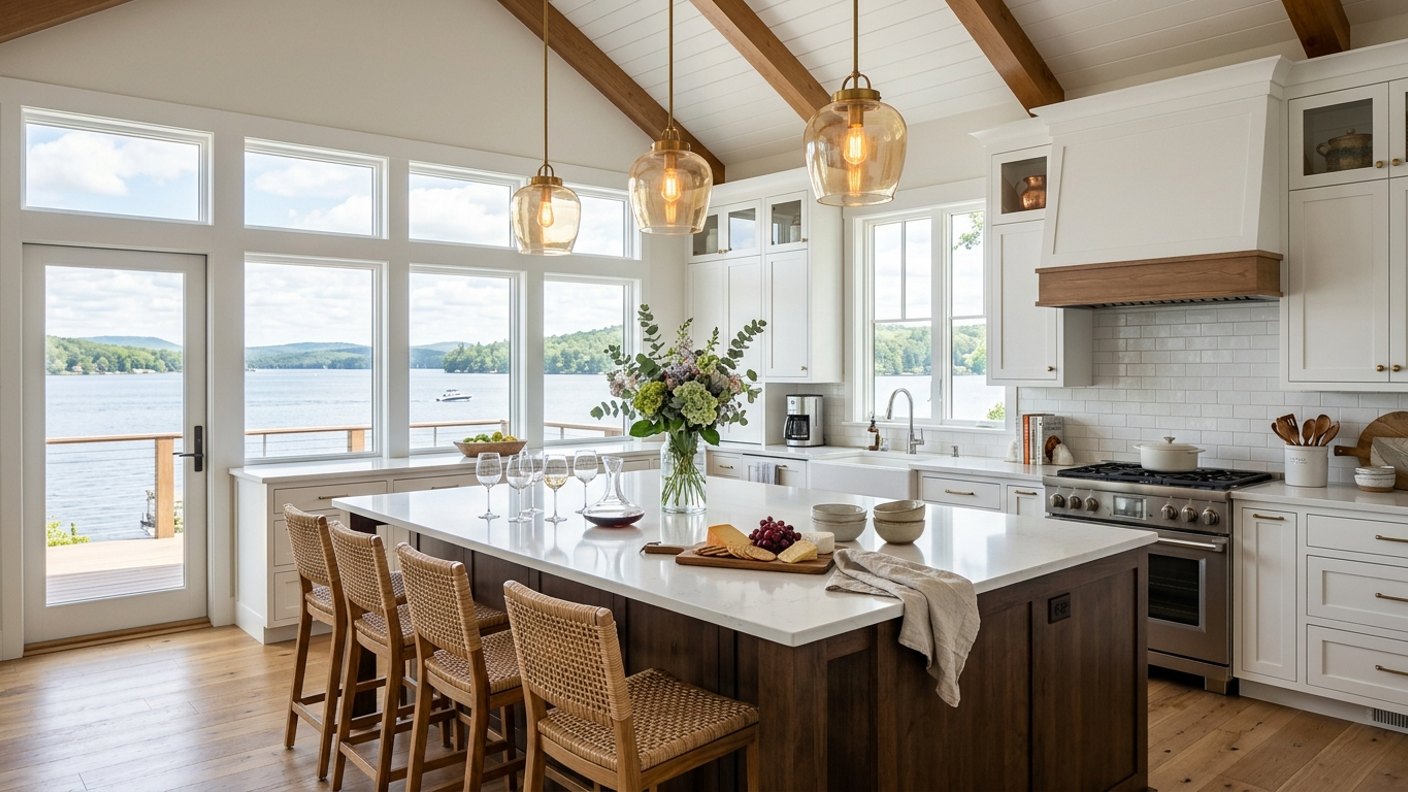
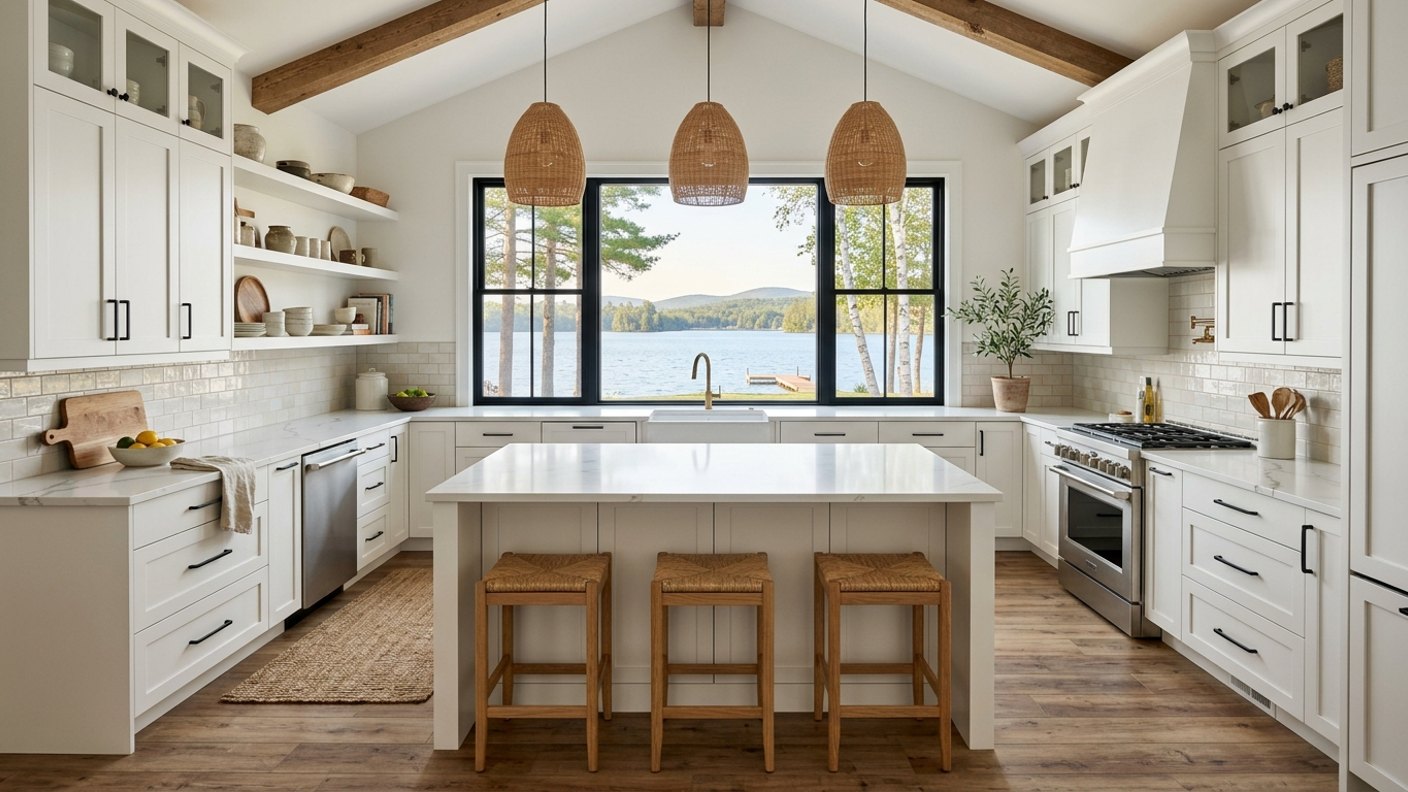
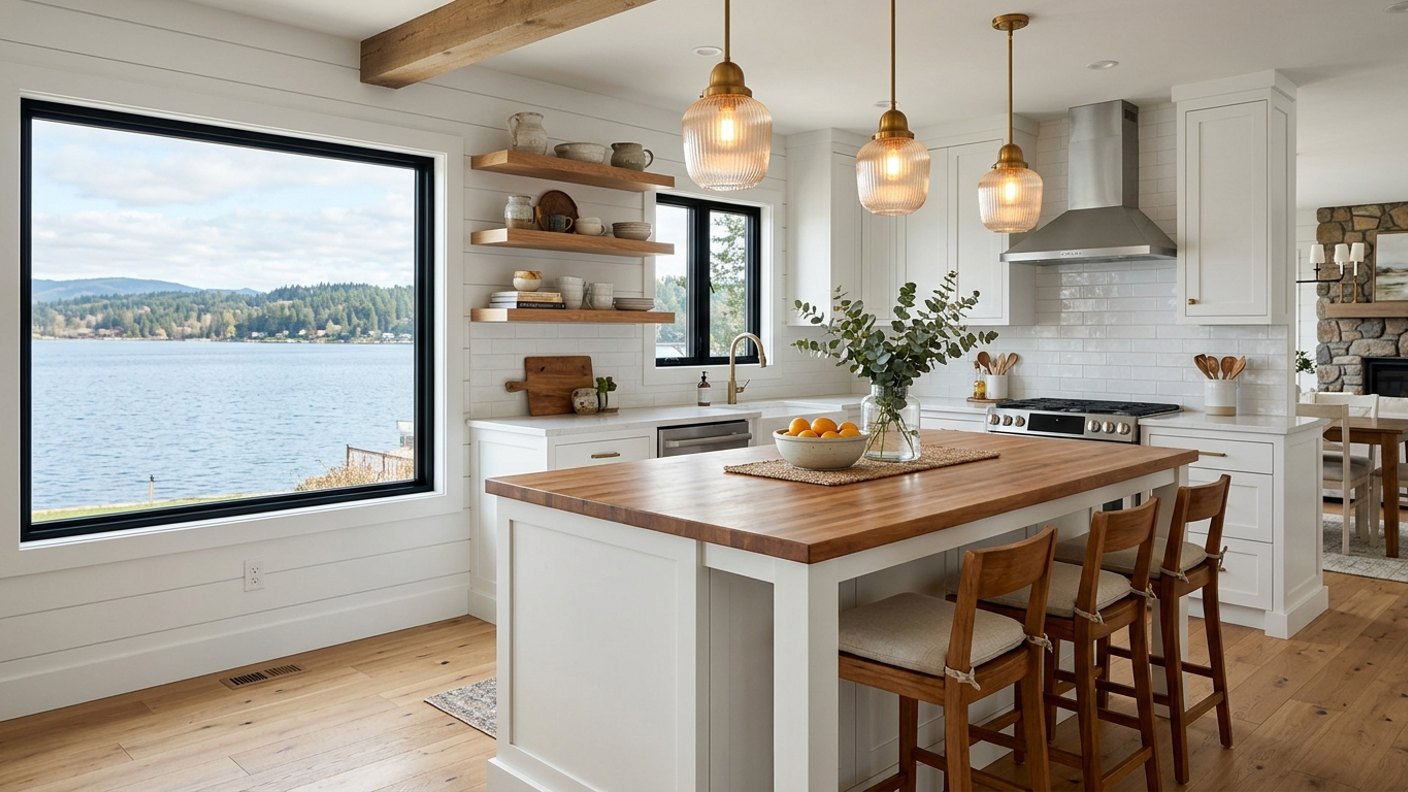
One thing that set my work apart from the start was caring about the lighting. So many lake kitchens are let down by bad lighting, and making warm pendants over the island and layered warm light a signature of my kitchens gave them a glow clients noticed and talked about. A small specialty within the niche, getting the lighting right, became part of my reputation. Finding the details you do better than anyone is part of building a business people remember. Mine, fittingly, is the light.
Worth Every Scary Moment
A year in, Quinn Lake Kitchens is real, busy, and mine, and the leap that terrified me has turned into a life I love, independent work, doing something I'm good at, in a niche I find endlessly interesting. It's been hands-on, uneven, and demanding, and worth every scary moment. If you're staring at your own leap, I can't promise it'll be easy. But I can tell you that building something of your own, doing work you love, is one of the most satisfying things there is.
Lighting in this kitchen: pendant lighting over the island and warm wall sconces