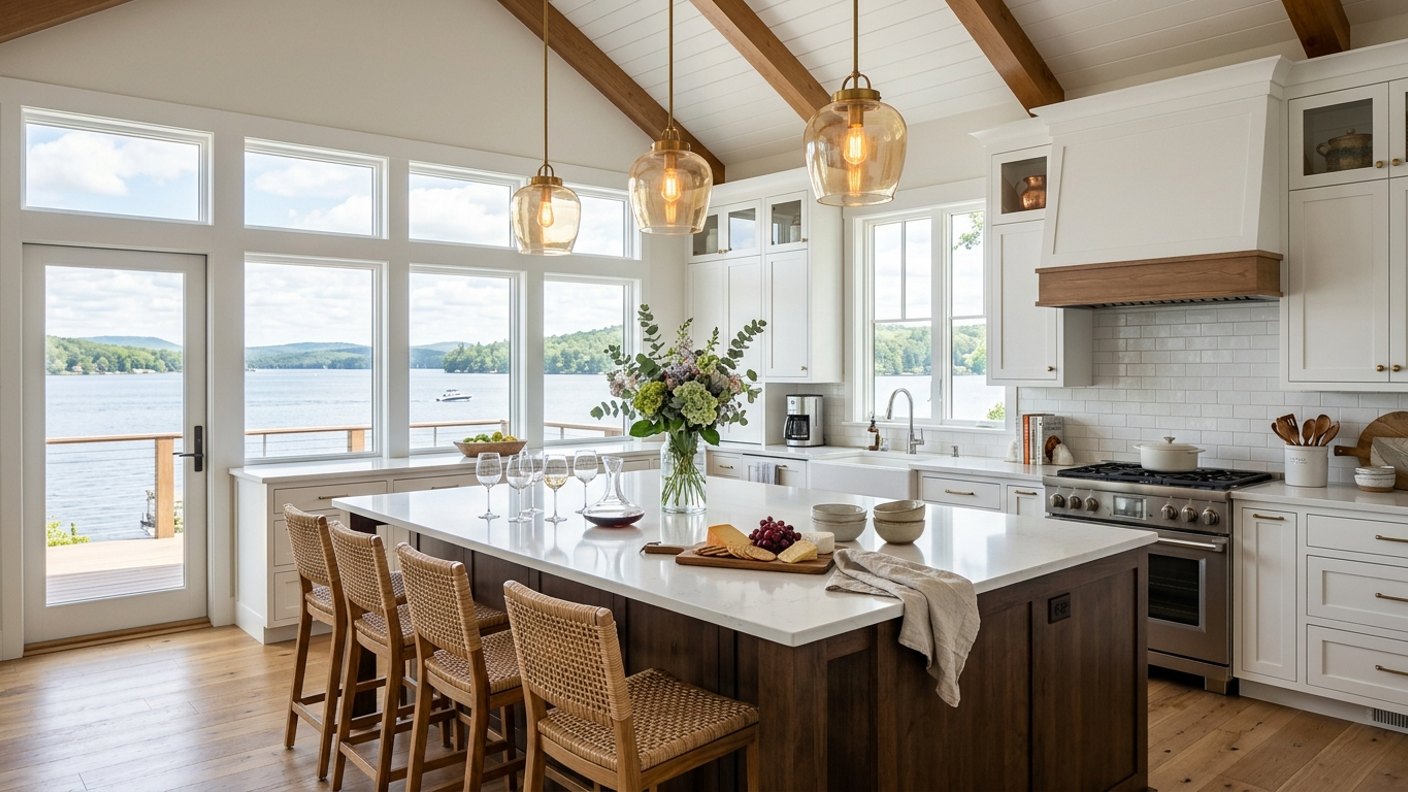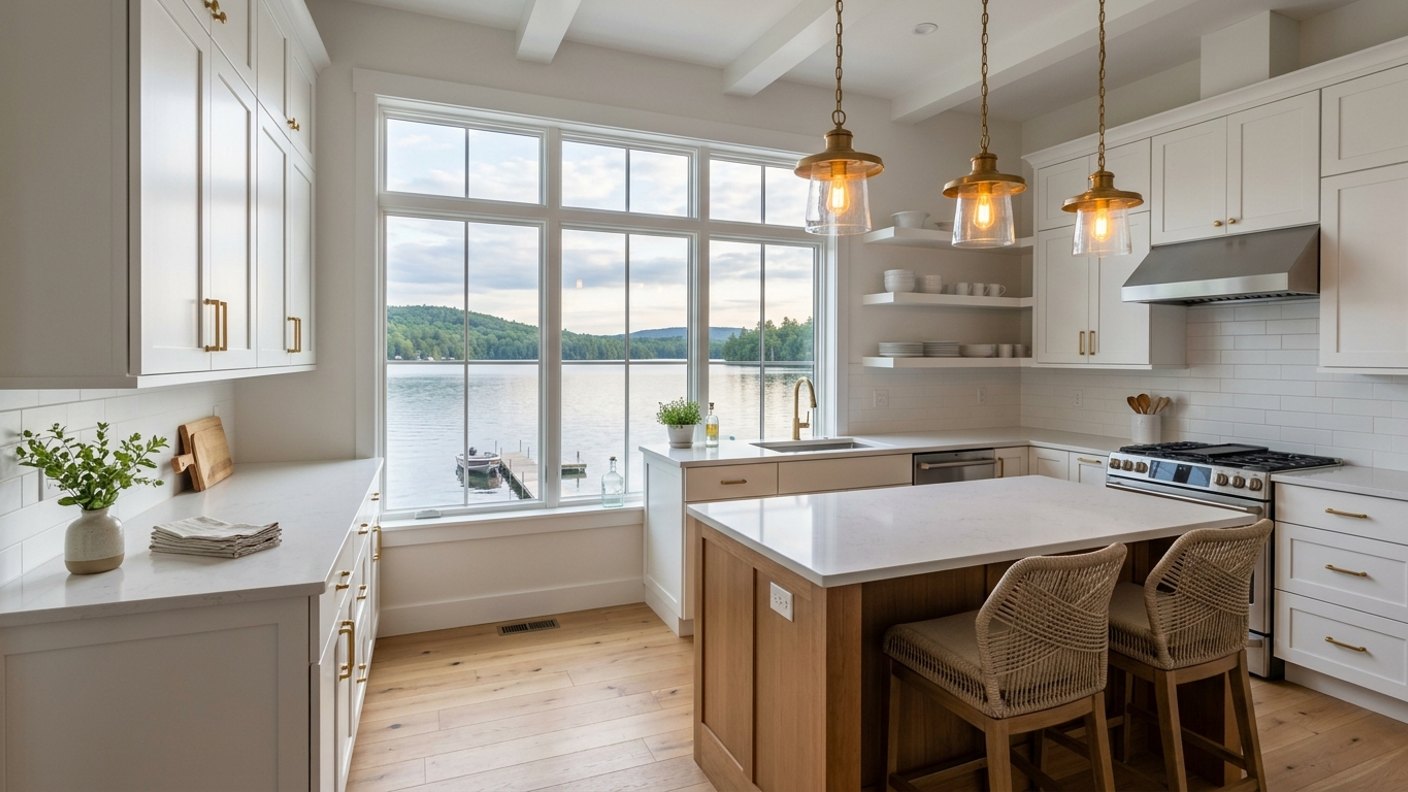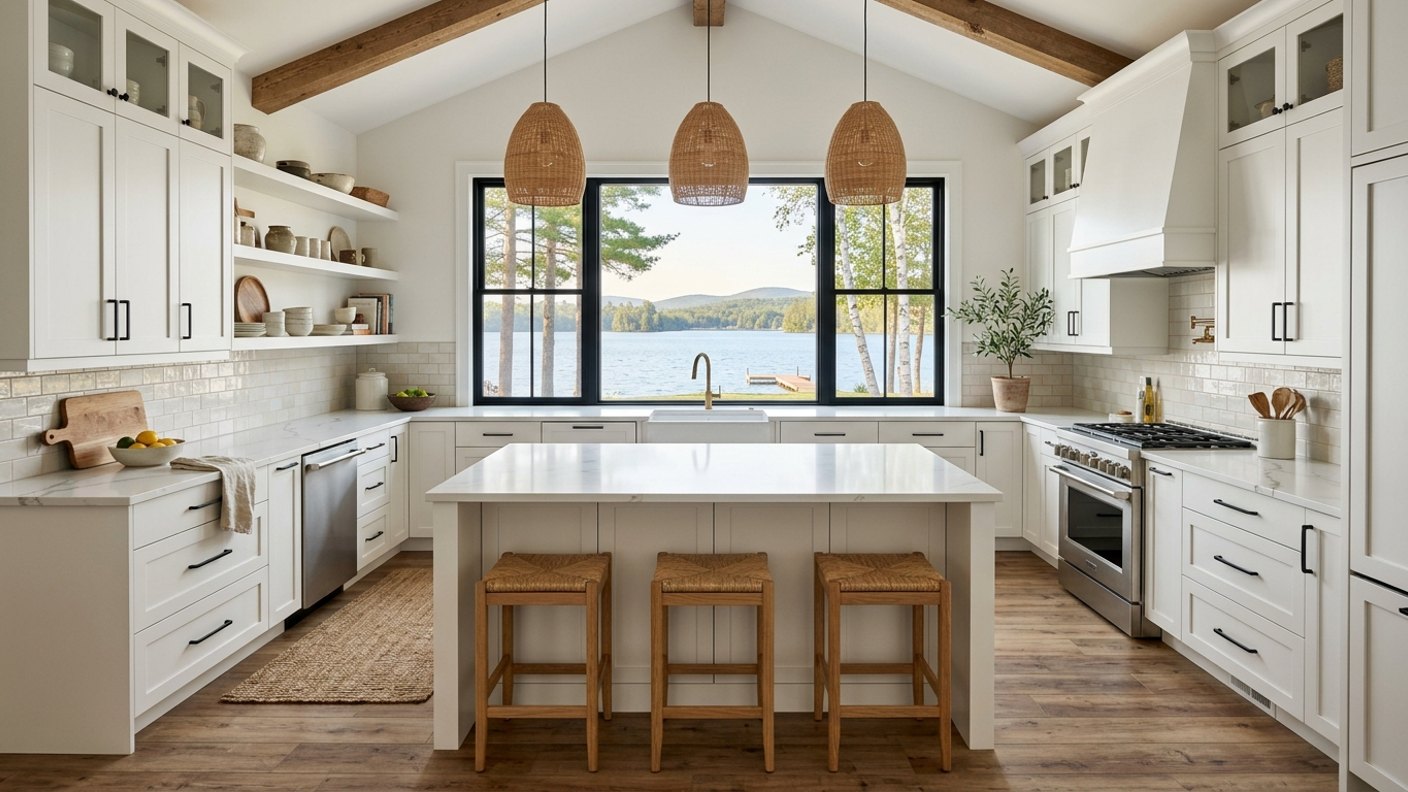
A seasonal lake house is brutal on materials in a way year-round homes never are. Swings from 35°F in winter to 90°F in summer destroy the wrong materials. It's used hard all summer by a wet, sandy crowd, then left damp, often unheated, and empty for months of winter. Materials that would last decades in a normal house can warp, stain, corrode, or grow mould in a seasonal one. After learning the hard way, here's what actually survives a seasonal lake house kitchen.
The Seasonal Double Challenge
The thing to understand is the double challenge: heavy summer use and a damp, empty, often unheated winter. A material has to take a pounding from a hosting crowd and then survive months of humidity and temperature swings with nobody there. Most material failures in lake houses come from ignoring half of that, choosing something tough enough for summer that can't handle the winter damp, or vice versa. I design for both seasons, because the house lives through both.
Quartz for Counters
For counters, quartz is the seasonal champion, non-porous, stain- and scratch-resistant, and needing no sealing, so it handles heavy summer use and a damp empty winter without special care. In a house that's hard to maintain and sits empty for months, that toughness and low upkeep matter enormously. Quartz looks after itself, which is exactly what a seasonal kitchen counter has to do. It's the surface I trust most to survive everything a lake house's two seasons throw at it.
Water-Resistant Flooring
Flooring has to handle wet summer feet and winter damp, so I choose water-resistant options, quality luxury vinyl plank for its toughness and warmth, or tile in the wettest spots. These shrug off moisture in both seasons, where a vulnerable floor would warp or stain. Water resistance is the non-negotiable for a seasonal lake floor, because it faces wet from the dock all summer and humidity all winter. A floor chosen for both survives; one chosen for neither fails fast.
Cabinet Finishes That Tolerate Damp
Cabinets face the seasonal damp too, so I specify quality, moisture-tolerant finishes that resist warping and degrading through a humid winter. Cheap or poorly-sealed cabinet finishes can suffer badly in a seasonal house, peeling or swelling over an empty damp winter. A durable, moisture-tolerant finish is what lets cabinets survive the off-season looking as good as they did in summer. In a lake house, the finish's ability to handle damp matters as much as how it looks.
Corrosion-Resistant Metals
The damp, sometimes salty-feeling lake air is hard on metals, so hardware, fixtures, and the faucet all need corrosion-resistant finishes and quality construction. Cheap metals can tarnish or corrode through humid seasons, where quality warm metals like good brass age gracefully instead. Choosing durable, corrosion-resistant metal finishes keeps the kitchen's jewelry looking right season after season. It's a place where spending a little more on quality pays off, because the seasonal conditions punish anything cheap.
Wood, Used Wisely
Wood brings the warmth a lake house wants, but it's vulnerable to seasonal moisture. So I use it wisely, properly sealed, in engineered or protected forms, and kept out of the wettest zones. I balance the warmth of some wood with water-resistant materials in the hardworking wet areas. Used carefully, wood adds essential warmth and survives; used carelessly near the water and through the damp winters, it warps and suffers. Respecting wood's limits in a seasonal house is how you keep its warmth without the heartache.
Light Fixtures Built to Last
Even the lighting has to suit a seasonal house, so I choose well-made pendants and sconces with durable finishes that handle the damp and heavy use. Quality fixtures with corrosion-resistant finishes survive the humid off-season and the busy summer alike, where cheap ones can degrade. Lighting is part of the materials story, and in a seasonal house it has to be as tough and well-finished as everything else. I pick fixtures built to last through the lake's two demanding seasons.
Tested by Two Seasons
Quartz counters, water-resistant floors, moisture-tolerant cabinet finishes, corrosion-resistant metals, wood used wisely, and durable fixtures. Those are the materials that survive a seasonal lake house kitchen. The brief is always the same: tough enough for a hard summer and resilient enough for a damp, empty winter. Choosing materials that pass both tests is what separates a lake kitchen that still looks great in ten years from one that's failing in two. The seasons are the real test, and I design for them.
Lighting in this kitchen: durable wall sconces and pendant lighting
My friend Wade at The Foster Cabin deals with the same seasonal-and-damp challenge in his mountain cabins, between his cabins and my lake houses, we've learned the hard way what holds up and what doesn't.