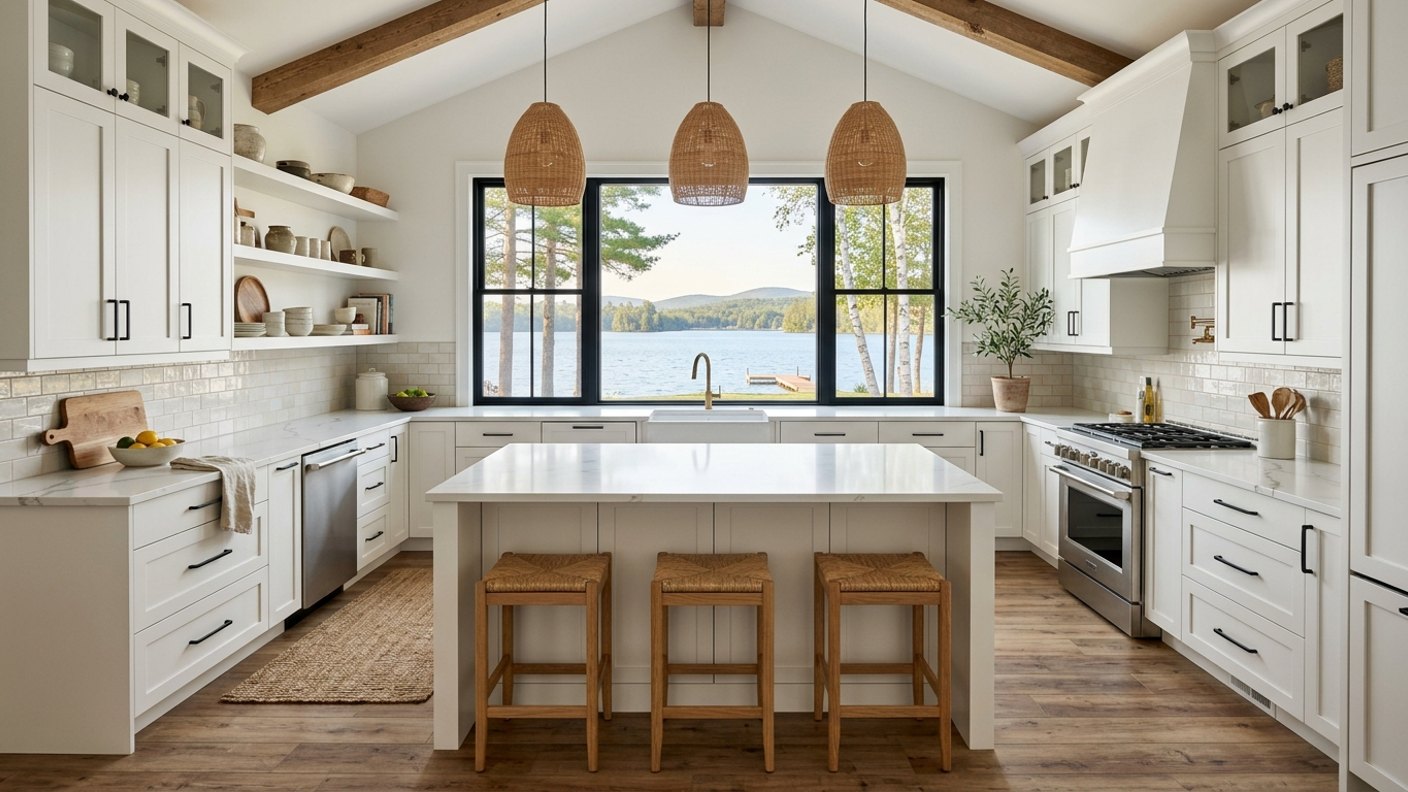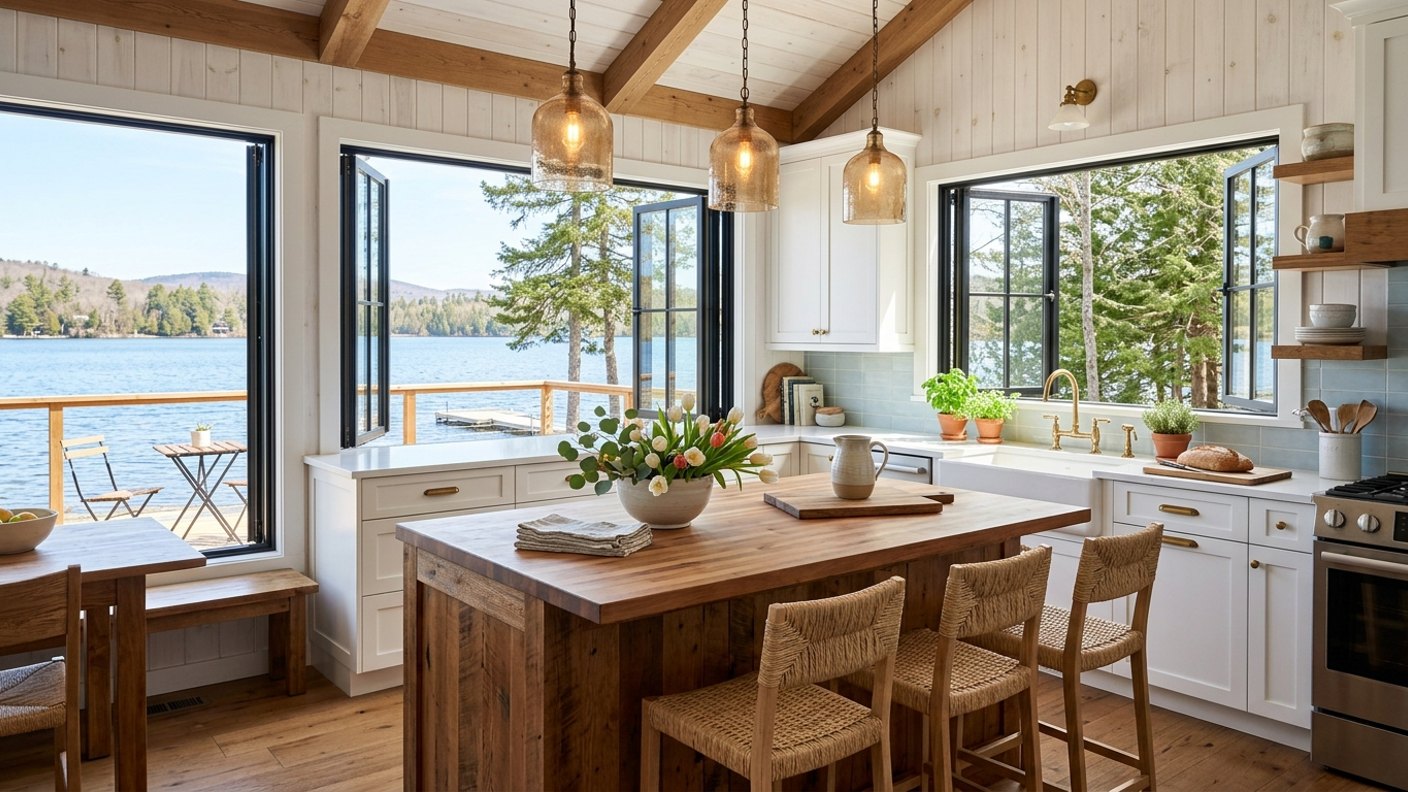
Opening the lake house in spring is one of the best days of the year. I budget a full day and about $200 in supplies to open a kitchen properly each spring. The season's about to start, the water's waiting, and the whole summer's ahead. But before the fun begins, the kitchen has to come back from its winter shut-down, and how you open it up matters as much as how you closed it. Here's how I get a lake kitchen from winter-shut to summer-ready, the right way.
Inspect Before Anything Else
The first rule of opening is inspect before you settle in. Before restocking or relaxing, I check for winter damage, pests, leaks, mould, freeze damage, because problems found early are far easier and cheaper to fix than ones discovered after you've built the summer on top of them. The opening inspection is the most important step, the one that catches whatever the winter did while it's still manageable. I never skip straight to the fun part; I look first.
Check for Pests
An empty house is a target, so I check for any signs of pest intrusion, droppings, nests, damage, anything that got in over winter. Catching a pest problem early, before unpacking and stocking, makes it far easier to deal with. A good closing routine the previous fall makes this step mostly a formality. But I always check, because an undiscovered pest issue only gets worse once the summer's food arrives. Find it first, handle it, then move on.
Restore the Water Carefully
Bringing the water back is when freeze damage reveals itself, so I do it attentively, refilling and repressurising the plumbing, watching closely for leaks as the system comes up, flushing the lines. And confirming the water runs clean before use. A burst or cracked pipe from the winter shows up now, and catching it as the water comes back, rather than after, prevents a small problem becoming a flood. I take this step slowly and watch carefully, and get professional help where the system warrants it.
Hunt for Mould and Damp
The closed winter can breed mould and damp, so I check for it, musty smells, visible growth, any moisture problems. And air the kitchen and house out thoroughly. Catching and addressing mould early keeps it from becoming a bigger, unhealthier problem as the warm season starts. A good closing the previous fall reduces the odds, but the damp is sneaky, so I look for it deliberately on opening. Airing out the space is one of the most satisfying parts of bringing a lake house back to life.
Deep-Clean for the Season
Once the inspection's clear and the systems are restored, the kitchen gets a thorough deep-clean, surfaces, appliances, storage, everything, to wash off the winter and start the season fresh. A closed-up kitchen always needs a proper clean before it's ready for food and guests. This is the step that turns a just-opened, slightly stale kitchen into a bright, ready-for-summer one. After the careful inspection, the deep-clean is where the kitchen comes back to life for the season.
Test Everything
I test all the systems and fixtures. The appliances, the faucet, the lighting, anything that's been dormant, to make sure it all works before the season depends on it. Finding a dead appliance or a failed fixture on opening day, with time to fix it, beats discovering it mid-dinner-party in July. A systems-and-fixtures check is part of bringing the kitchen properly back online. I'd rather catch any winter casualties now, calmly, than during the first big summer gathering.
Restock and Refresh
With the kitchen inspected, restored, cleaned, and tested, the happy final step is restocking the storage and refreshing the space for summer, food, supplies, fresh touches, the lights glowing warm again. This is when the kitchen goes from functional to ready to host, and it's the fun part of opening. Bringing the kitchen back to a stocked, warm, welcoming summer state is the reward for doing the inspection and restoration properly first. Now the season can begin.
Closing Well Makes Opening Easy
The big lesson I share with clients is that opening is easy when closing was done right. A kitchen closed up thoroughly the previous fall, food cleared, deep-cleaned, sealed, winterised, damp managed, opens to few surprises and a quick path to summer-ready. A kitchen closed carelessly opens to pests, mould, or a burst pipe. The two routines are a pair, and a good closing is really a gift to your spring self. Get both right and opening day is exactly the joy it should be.
Lighting in this kitchen: warm pendant lighting and warm wall sconces